After nearly two decades of struggling to keep pace with changing workplaces and women’s wardrobes, Ann Taylor is plotting a comeback. As more people return to the office and rethink what dressing for work looks like, the heritage brand has launched its first major marketing campaign since 2017 to reconnect with younger shoppers. But analysts say its success will really depend on whether it can rediscover what once made it distinctive while convincing a new generation that it still has a place
ace in their wardrobes.
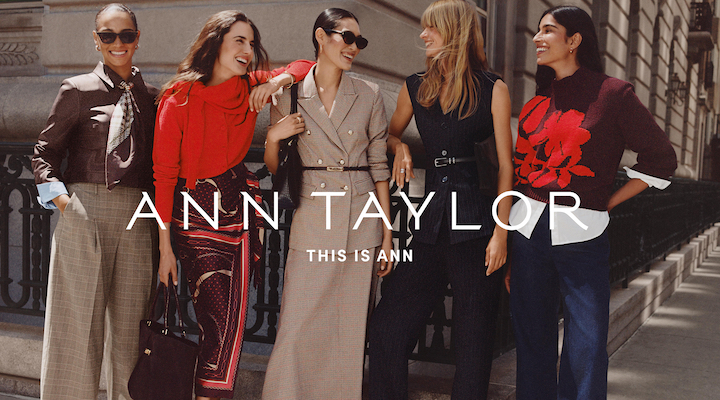
Dubbed “This is Ann,” the 360-degree campaign is part of a broader revamp being engineered by parent company KnitWell Group. Its imagery centres on women racing around New York City’s Upper West Side and Central Park, juggling work, social lives and family responsibilities while wearing pieces from Ann Taylor’s fall collection, including blazers, silk scarves and tailored separates.
The campaign will also extend into New York Fashion Week. On September 8, Ann Taylor will host a pop-up activation in SoHo featuring campaign imagery, a street cart and a newsstand stocked with “This Is Ann” editorial materials, including magazine-like catalogues, postcards and campaign-wrapped issues of fashion publication Daily Front Row.
Heather Gruccio, EVP and chief merchandising officer, said the campaign reflects the lives of modern women while bringing “a modern point of view that feels distinctly Ann Taylor.” The push follows the February launch of career and style Substack The Desk, with a brand ambassador program planned for early 2027. But whether these efforts can overcome the problems that caused Ann Taylor to lose relevance remains an open question.
How Ann Taylor became outdated to the modern shopper
Christine Russo, principal of a retail creative and consulting agency, pointed to several factors behind Ann Taylor’s decline in popularity since its heyday in the ’80s and ’90s.
“First off, the work style aesthetic has changed and the owners didn’t properly invest in keeping up with trends, so the brand fell off,” said Russo.
She also pointed to the management of Ann Taylor’s previous owner, Ascena Retail Group, which struggled with its portfolio of brands, including Lane Bryant and Justice, before declaring Chapter 11 bankruptcy in 2020.
Russo said a new marketing campaign, particularly one that looks “fairly typical,” would not be enough to deliver the kind of comeback achieved by brands such as Coach.
Instead, Ann Taylor will need to focus on reintroducing itself to a new generation of customers and acquiring them, a strategy that could be supported by its planned brand ambassador program.
Frankie Margotta, strategy director at consulting firm Triptk, echoed Russo’s assessment: “Ann Taylor stood for the modern woman – until it didn’t.”
Margotta said Ann Taylor once thrived by dressing women for success in corporate settings, an approach that was once radical for the fashion industry.
But as both the professional working woman and the workplace itself evolved, Ann Taylor failed to keep pace, Russo said.
Margotta believes “This Is Ann” could be a step in the right direction.
“Polished office wear is having a moment that aligns naturally with Ann Taylor’s heritage and reputation. The brand also sits in an ideal fashion tier, between bargain buys and higher-end labels, which aligns with the savviness of today’s consumer. The new campaign feels like a declaration that the brand is showing up with a clearer view of its audience, one that better reflects the realities and needs of professional women today and extends beyond a role or title,” said Margotta.
To succeed, Ann Taylor will need a clear point of view on design and a sharper sense of where its clothes and accessories fit into people’s lives. That means speaking both to what customers need their clothes to do and what those choices say about who they are – or who they want to become.
Can Ann Taylor revive its image?
Retail brand strategist and marketing consultant Bethany Paris Ramsay remains optimistic about Ann Taylor’s chances of a comeback.
“Ann Taylor has a real opportunity to have a moment again, particularly as more people return to in-office work and women are redefining what getting dressed for work means again,” Ramsay told Inside Retail.
The traditional “work wardrobe” has changed dramatically, moving from conventional corporate dressing to increasingly casual offices and then remote and hybrid work. Along the way, the distinction between workwear and the rest of our wardrobes became increasingly blurred.
“Now women are thinking about how they want to show up professionally again, but I don’t think anyone is interested in simply resurrecting the corporate uniform of the past. That’s one of the things Ann Taylor’s new campaign gets right,” said Ramsay.
Ramsay said the campaign successfully showcases the range of ways women are choosing to dress for work today, rather than prescribing a single version of what a professional woman should look like. Its classic pieces feel modernised, the styling more relevant and the overall proposition better aligned with how women are dressing today.
She also pointed to a sense of cultural nostalgia working in Ann Taylor’s favour.
“We’re seeing so much conversation on social media around the ‘adulthood I was promised,’ particularly among millennials who grew up with a very specific vision of what successful adulthood would look like. For a lot of women, getting dressed in Ann Taylor and heading off to the career you’d worked toward was part of that picture. There can be something powerful about tapping into that memory now, as long as the brand isn’t simply selling us the past. The opportunity is to capture some of that feeling and translate it for the lives women actually have today.”
Ramsay also praised Ann Taylor’s launch of a Substack, saying it helps reflect the modernised image of its customer: a woman who is professionally engaged and culturally curious, reading about fashion, careers, business, beauty, identity and culture. The key, she said, will be treating Substack as a true editorial and community platform rather than simply another place to push product.
Quality will also be critical to making the comeback stick. As customers become increasingly underwhelmed by fast-fashion fabrics, they are craving quality materials, great fit and thoughtful tailoring – all things Ann Taylor was historically good at.
“If the brand can modernise its classics while consistently delivering on those fundamentals, and pair that authority and nostalgia with modern styling, strong product and culturally relevant storytelling, I think there’s a real opportunity for women to reconsider the brand,” concluded Ramsay.
Further reading: Why Under Armour’s comeback depends on finding its identity