
More than a decade ago, cattleman Paul Martin sought investment to expand his beef operation in Queensland when a conversation with Saudi investors took an unexpected turn. Why was Australia culling thousands of camels each year, when the animal is so revered in different cultures for its meat, dairy and ability to carry people and goods across harsh terrain? “They were just mortified,” Martin explained. So Martin decided to change track, and today runs Summer Land Camels, a business that
at turns camel milk into a range of premium consumer products. The farm occupies 850 acres at Harrisville, nestled in Queensland’s Scenic Rim with a herd of around 500 animals.
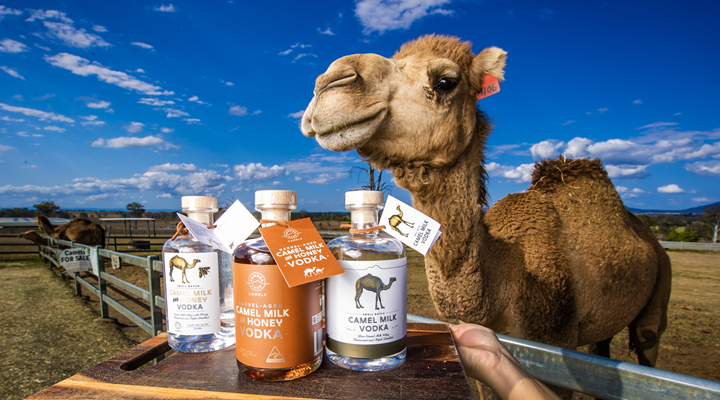
Visitors can ride a camel, then shop for its contributions to the household. There’s drinking milk, of course, plus milk powder, Persian feta-style marinated cheese, fresh fromage blanc, gelato, and skincare. Even the whey left over from cheesemaking has a second life, in vodka and rum. Harris Farm Markets lists its milk in one-litre bottles and selected pharmacies and health-food stores stock its skincare.
Martin’s interest in camels, however, predated the conversation with the Saudi investors. Years earlier, he had begun questioning what other species could complement cattle on Australian farmland. Camels browsed differently, reaching into trees and eating prickly invasive plants, while also returning nutrients to the soil through their manure. “I was fairly comfortable handling the animal,” he explained.
The Saudi conversation opened his eyes to another opportunity: camel dairy. Camel milk could become food, an ingredient in skincare and the basis of further products, giving Martin several markets through which to pursue his ambition of establishing camels as accepted Australian livestock.
Milk, cheese and vodka
Martin founded Summer Land Camels in 2015. During his research, he found several customer groups, each with a different grasp of camel milk’s value. Arab and Somali consumers were already familiar with camel milk and treasured its digestive benefits. He also found people seeking relief from eczema through camel milk-based skincare and a cohort of parents exploring alternatives they hoped their children would digest more comfortably.
The business also presented an unusual challenge: turning feral camels into domesticated livestock. Martin’s camels are mustered from desert herds, then spend four to eight weeks in yards in western Queensland, where they become accustomed to people and are managed alongside cattle. “We get them in, handle them regularly and then build from there.”
Choosing where to establish the farm was another important decision. Martin wanted to bring the animals closer to potential customers, rather than operate in the remote regions where feral camels are found.
The Harrisville location places the farm within reach of Brisbane, the Gold Coast, Toowoomba and Warwick, bringing families and tour groups into the business’ orbit. “So rather than set this up at Alice Springs, where all the camels are, we thought, let’s get them out of that region, close to people.”
The cafe, farm shop, tours and camel rides make the property a place of production, recreation and retail, with Camels, the main attraction, available for an introduction throughout the farm.
The old workhorse earns its shelf space
Martin spoke with enthusiasm about the cameleers who transported goods through inland Australia in the late 19th century, almost akin to an Australian Silk Road. Camels were hardy animals that could transport goods while withstanding the harsh terrain and climate.
“It’s certainly part of our story about why we have feral camels,” he explained. In 1925, South Australia passed legislation permitting landholders to destroy trespassing camels after public notice.
For Martin, the irony endures as cattle, sheep and goats also arrived through human enterprise. Today, the Northern Territory Government puts Australia’s feral camel population at more than one million across the arid interior.
It’s abundantly clear how deeply he cares for his camels. “It’s like we owe them something, because we just let them go,” he said. “They got brought over here to do a job. They did the job they were meant to do, and then they were deserted.”
For Summer Land Camels, milk, moisturiser, vodka and rum all belong to the same attempt to find productive uses for animals drawn from feral herds. Its retail proposition is already concrete, reaching from a Harris Farm refrigerator to the farm shop at Harrisville, where Martin can introduce the animal behind the label and invite the customer to reconsider its prospects.
“There aren’t many who leave who aren’t blown away by these big animals,” he said. “The products that we’re able to pull out of them – that was just going to waste.”


