As retail and real estate evolve across Asia, developers are rethinking what makes a shopping destination relevant. Ingka Centres, part of the Ingka Group that also owns Ikea Retail, is among those leading this shift. Inside Retail speaks with Sebastian Hylving, head of global development at Ingka Centres, about how the company approaches localisation, growth and innovation across diverse markets in Asia. Inside Retail: Ingka Centres currently operates 38 assets across 15 markets. What strategic
ategic gaps are you still looking to fill, particularly in Asia?
Sebastian Hylving: We have a global outlook and are always looking for strong opportunities across all our markets. Over the past few years, we’ve expanded significantly in China, and now we have two major projects under development in India, Gurugram and Noida.
Both are large mixed-use developments in prime locations, well-connected to public transport. They combine shopping, dining, living, working and leisure with offices and hotels integrated together.
IR: You’ve been investing heavily in China and India. What have been the biggest challenges in localising the Ingka Centres model for these very different markets?
SH: Every business is ultimately local, but there are global patterns that cut across markets. We work from a global meeting place framework that defines our approach everywhere, but we adapt deeply to local contexts.
We invest a lot in understanding local consumers and communities. Our ‘Life in Community’ report gives us valuable insights into people’s needs and habits. We also have access to Ikea’s extensive data and research, and we regularly conduct surveys and interviews to learn about customers’ daily lives, wishes and desires.
For us, it’s important to stay very close to the markets to understand the markets. But if we only introduce what is already in the market, then we don’t bring anything new. So, our strength comes from fusing those two perspectives to create meaningful experiences.
For us, “experience” isn’t one single thing. It’s the totality. It’s about design, accessibility, customer service, and even how you enter the car park or connect via public transport. When all those pieces come together, that’s when the magic happens.
IR: When curating each destination, what kind of local research or insights guide your decisions on what the community truly needs?
SH: When we developed our centres in China, for example, we conducted extensive interviews and fieldwork in local communities – in cities like Wuxi, Wuhan, Beijing and Shanghai.
We studied how people live, shop and socialise, but we also looked beyond what they want today to anticipate what they’ll want tomorrow. We connect insights across markets, from China to India and beyond, to identify shared trends.
Our in-house insights team maps major and micro-trends, and we complement that with ongoing focus groups and exit interviews. We also learn from our network of thousands of retail partners who operate across markets and share their experiences with us.
We don’t just buy reports. We believe in being on the ground, close to our visitors and partners.
IR: Can you share more about your recent or upcoming projects in Asia, and what makes them distinctive within your global portfolio?
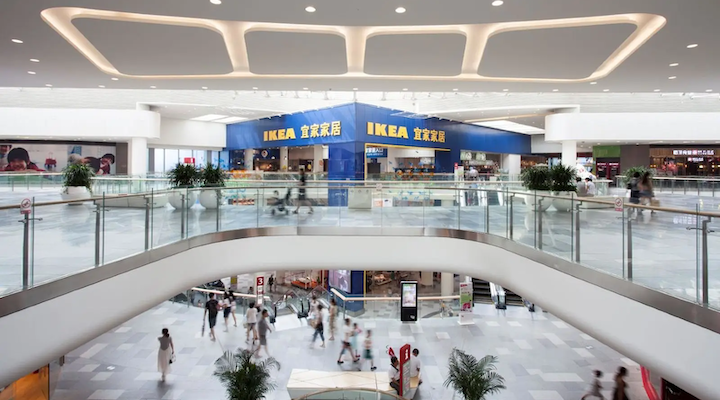
SH: The main distinction between our projects in Europe and Asia is scale. Our latest centres in China are both more than 400,000 square meters GBA and feature full mixed-use components.
When we opened in Xi’an, we recorded 20.7 million visitors in our first year, with 6 million visitors in the first month alone. In Shanghai, we had 18.6 million visitors in just 11 months. The best indicator of success is visitation.
Our goal is to make each Meeting Place feel like a “living room” where people come to socialise, relax, dine and shop. We’ve struck a strong balance between retail, F&B and leisure.
In Shanghai, for example, we have a Scandinavian-inspired rooftop village featuring greenery and seating areas, as well as a space for shows, gatherings, and relaxation. The Indian projects will follow a similar blueprint but with local adaptations based on community feedback.
IR: Besides China and India, which other markets are you looking at to replicate this success?
SH: We’re exploring opportunities in all our markets, in close partnership with Ikea, since we’re part of the Ingka Group. Our expansion generally follows Ikea’s footprint.
Currently, we’re present in the US, UK, Europe, India, and China, and we also collaborate with more than 400 stores worldwide, including those of Ikea. In Europe, for example, we’re expanding by adding retail parks, connecting shopping centres, and acquiring mixed-use assets to open up opportunities for Ikea.
A recent example is our Paris project, where we introduced a 10,500-square-meter Ikea store into a mixed-use site. Since opening, visitation has increased by more than 30 per cent. Similar results were seen in our UK projects. Ikea remains a powerful anchor and driver of visitation in all our developments.
IR: What are the concepts behind the Hej! Workshop and One Planet initiatives, and are there plans to introduce them in Asia?
SH: Of course. Hej! Workshop launched in 2022. It’s inspired and furnished by Ikea. We currently have four permanent locations: Stockholm, Paris, San Francisco and Shanghai, plus pop-ups in Bratislava and London.
They’re flexible co-working and collaboration spaces that promote work-life balance and sustainability, very much aligned with our Nordic roots. They can also serve as incubators for small businesses, which we can support as they grow.
As for One Planet, it’s been extremely successful in Asia, and we’re now bringing it to Europe. It’s a platform for sustainability, showcasing how we and our partners contribute to a better society.
Sustainability is at the heart of everything we do. We’re on track to reduce our operational footprint by 85 per cent by 2030, powered entirely by renewable electricity. Compared with FY2016, we’ve already achieved an 86 per cent reduction.
We’re very proud of that progress. One Planet is our way of turning those commitments into visible community engagement.
IR: Supply chains have faced major disruptions in recent years. How has that affected how Ingka Centres plans and executes new developments?
SH: It’s encouraged everyone to look more seriously at local sourcing. Local materials result in shorter lead times, lower emissions, and greater resilience. Of course, in some cases, we still need to import, but our priority is always to source locally whenever possible.
IR: Retail competition and urban dynamics shift very fast in China. How do you future-proof your developments to stay relevant over time?
Constant evolution is key. Our global footprint allows us to track emerging trends across markets and stay ahead. Innovation and growth must be continuous, especially in Asia, where change happens rapidly.
We measure success through visitation and tenant sales, both of which are growing strongly. Our new centres in Asia opened with an occupancy rate of 98–99 per cent, which is exceptional. Many malls open at 40–60 per cent and take years to stabilise.
We treat our meeting places like living ecosystems or even amusement parks. If there’s no queue at an attraction, you change the attraction. The same applies to retail — we’re constantly curating and refreshing our offer.
IR: India has been developing rapidly, attracting major global investments. What opportunities and challenges do you see there?
SH: Entering a new market always brings challenges, but we’re fortunate that Ikea has operated in India for years. We can leverage their insights and relationships.
India is vast and diverse, with different regions, languages and cultures, so we must adapt to each micro-market. Copying and pasting a global model doesn’t work. We combine global expertise with local knowledge, mixing international and local talent in our teams to get the right balance.
Our goal is to make each Meeting Place a true destination and “living room” for all, offering the right mix of retail, dining, entertainment, and community engagement.
IR: How do you see innovations in materials, logistics, or local manufacturing shaping your development process in the next few years?
SH: I can’t speak much on logistics, but regarding materials, I believe AI will be transformative. We’ve only seen the beginning.
The construction industry remains quite conservative, much like the automotive industry was until one company completely disrupted it. I expect a similar shift to come soon, driven by AI.
AI can dramatically reduce design lead times and improve efficiency in terms of cost, sustainability, and user experience. We’re already experimenting with green steel and concrete, but the next step will come when we see 3D printing and other innovations applied on a commercial scale.
We work closely with architects, consultants and construction partners to stay at the forefront of these changes.
Further reading: What retailers can learn from Ikea’s ‘real zero’ climate strategy.