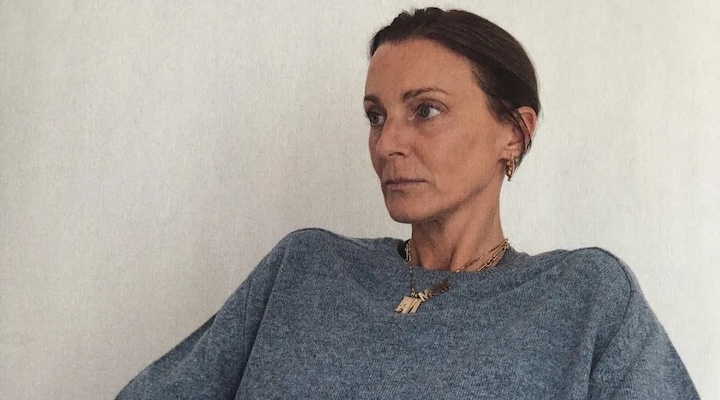
When Phoebe Philo announced her long‑awaited return to fashion in 2021, expectations were sky‑high. The British designer – whose quiet, intellectual minimalism transformed Céline into a cultural phenomenon – had built more than a brand during her decade there: she built a movement. Three years later, her namesake label is beginning to translate that creative legacy into commercial momentum. Double‑digit growth and a strong 2025 outlook According to the company’s latest filings with
with the UK’s Companies House, Phoebe Philo Ltd. nearly doubled its turnover in 2024, climbing from £5.7 million in 2023 to £11.2 million for the year ended 31 December 2024. Despite the strong revenue jump, the label reported a deeper annual loss of £24.4 million, up from £21.8 million a year earlier – a figure the company attributes to heavy strategic investment during its first full year of trading.
That investment appears to be paying off. Forecasts for 2025 project turnover of around £32 million – roughly triple the 2024 level – align with the company’s five‑year growth roadmap. Accelerating demand in both direct‑to‑consumer and wholesale channels signals that Philo’s refined vision continues to resonate with luxury consumers attuned to craftsmanship and restraint.
Expanding the retail footprint
An ambitious retail rollout across major international fashion markets underpins the brand’s rapid revenue increases. In early 2024, Philo’s collections arrived at prestigious doors, including Bergdorf Goodman in New York, 10 Corso Como in Milan, and Dover Street Market in both London and Paris. American retailers such as Neiman Marcus and Maxfield, along with The Webster in Miami, also joined the wholesale roster. The expansion has been complemented by extended e‑commerce capabilities for APAC clients, creating a globally integrated ecosystem where direct‑to‑consumer sales remain the main growth engine, accounting for roughly two‑thirds of 2024 turnover.
Preparing for a Mayfair flagship
Adding to the momentum, industry reports indicate Philo is preparing to open her first physical flagship on Carlos Place in Mayfair – a short walk from The Connaught hotel and across the street from The Row. The store location places Philo beside some of the world’s leading quiet‑luxury players, reinforcing the label’s distinct space within the contemporary luxury landscape.
The planned London flagship marks a symbolic homecoming for Philo, who long championed British modernism and minimal elegance. For a designer who reshaped luxury retail once before, the opening offers a new platform to redefine experiential retail design in the age of curated minimalism.
Investing for the long haul
The widened annual loss reflects the substantial investment required to scale a global luxury brand from scratch. The company cited spending across product development, digital infrastructure and operational scale‑up. That strategy encompasses expanding categories – especially accessories, footwear and limited‑edition capsules – while strengthening supply‑chain transparency and sustainable material sourcing.
In sustainability efforts, Phoebe Philo Ltd. established its first carbon footprint baseline and introduced an ethical sourcing policy, partnering with suppliers that meet measurable environmental standards. These long‑term commitments frame sustainability not as marketing positioning but as structural practice – a contrast to the short‑lived, marketing‑driven claims often seen across the fashion sector.
Audience engagement and brand strength
A decade after leaving Céline, Philo’s influence over luxury visual language remains unmatched. Her return quickly energised the Philophile community – a passionate following spanning former Céline clients, stylists, editors and new generations discovering her purist aesthetic for the first time.
The filings also showed that social media impressions grew 48 per cent year‑on‑year to 28.6 million in 2024, with strong engagement among core demographics in both Europe and North America. The retention rate of 28 per cent within 18 months of launch is notable for a digitally native luxury brand, signalling early loyalty among high‑value customers.
The LVMH effect – and exception
While LVMH holds only a minority stake in Philo’s brand, the collaboration has drawn considerable attention. Historically, LVMH’s smaller experimental ventures have struggled — notably Rihanna’s Fenty apparel line, shuttered after less than two years — often overshadowed by mega‑brands like Louis Vuitton, Dior and Fendi. Yet Philo’s trajectory may represent a rare exception.
Her extraordinary track record at Céline, where she lifted annual revenue from roughly €200 million to more than €700 million by 2017, gave her credibility — and autonomy — few designers command. With Philo, LVMH appears to be betting not on a celebrity‑driven label, but on timeless design values that build slowly, sustainably and with precision.
The road ahead
Looking ahead, the brand plans to capitalise on its global retail network and expand further across APAC, reinforcing wholesale penetration while refining its direct‑to‑consumer digital strategy. The upcoming Mayfair flagship will serve as both brand beacon and immersive experience centre – an opportunity to demonstrate how Philo’s pared‑back sensuality translates into physical architecture.
For a brand just two years into full trading, doubling revenue is only the beginning. With a 2025 turnover target of £32 million, Philo’s namesake brand is well positioned to become the luxury market’s next great modern classic – one rooted not in hype, but in enduring design, discipline and trust.
Further reading: Christopher Bailey to depart Burberry after 17 years