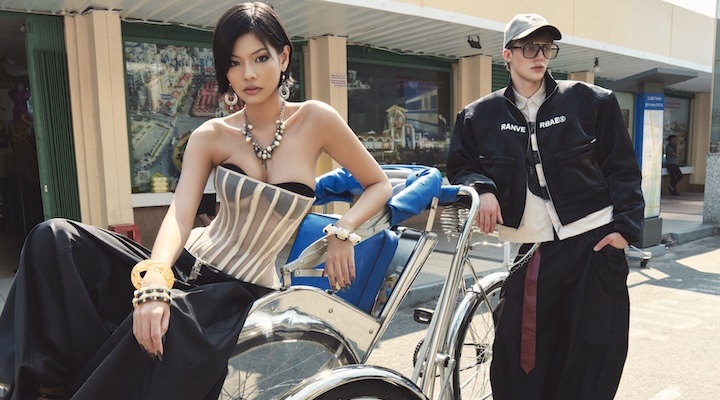
Seeing the rise in Aussie shoppers visiting boutiques in Asia for curated fashion pieces, Underground by Isy (UBI) is trying to run the route in reverse, bringing the inventory to Australia. The current stable includes LSoul, Liniss, Devotus, Tatichu and RVB. The idea, co-founder Julie Nguyen and Lifang Chia say, did not arrive in a flash. “It wasn’t a single moment. It was a build-up of conversations with founders across Vietnam,” Chia said. “The more time we spent with thes
h these brands, the clearer it became how much thought was going into what they were making, and how few people outside Vietnam knew these brands existed at all.”
Australian customers were discovering the labels by accident, usually while travelling. “That’s really where the idea came from. Not just, ‘Let’s sell these,’ but ‘These brands deserve to be seen properly, by people who’ll never make that trip.’”
A scene that outgrew its channels
“We’ve had customers and influencers reach out saying how excited they are that these Vietnamese brands are finally available in Australia,” Chia said. “Many had already discovered them while travelling through Vietnam or elsewhere in Asia, but until now, there wasn’t an easy way to continue buying them once they returned home. Having the inventory locally changes that.”
She added that today’s consumers are much more open to discovering independent brands from outside the traditional fashion capitals. “They’re looking for something unique, with a story behind it, and that’s exactly where we see UBI fitting in.”
Betting against the marketplace model
The inventory decision is the most analytically interesting part of the business. The prevailing wisdom in cross-border fashion has favoured asset-light marketplaces, which scale quickly but invest little in any single brand. UBI has taken the opposite position: fewer brands, direct relationships, owned stock held in Australia for fast fulfilment and self-funded marketing.
“We didn’t want to simply buy products and resell them. We wanted to actively contribute to the ecosystem we were becoming part of,” Chia said. “We spend time understanding why a brand exists and how the founder thinks about design. Craftsmanship matters a lot to us, too, not just the current collection.”
The exciting names, she added, “aren’t the biggest names. They’re founder-led, with a clear point of view, even if they’re still small.”
“Reliability matters a lot to us. We look at production capability, quality control, sizing consistency, clear and consistent communication, replenishment potential, and whether the brand has the capacity to support growth,” Nguyen said. “Great design only gets you so far; a long-term partnership needs operational strength behind it too.”
There is family precedent behind the discipline. Nguyen grew up around clothing manufacturing in Australia.
“I watched my parents work incredibly hard in clothing manufacturing. Long days, late nights and constant dedication were simply part of life,” she said. “It taught me that fashion isn’t just about what consumers see on a rack. There are countless individuals involved in bringing an idea to life. That perspective ultimately made me more interested in building something of our own, because I understood both the creativity and commitment required to create a brand with longevity.”
The map beyond Vietnam
While the majority of UBI’s portfolio of brands are Vietnamese labels, the platform is seeking to add more independent brands from other Asian countries.
“Vietnam felt like the natural place to start,” the founders said, citing Nguyen’s personal connection to the country and the pace of its creative scene. “Malaysia is actually on our list for similar reasons. I’m Malaysian myself, so it’s somewhere I’d love to bring UBI down the track,” Chia added, with China, Thailand and South Korea also on the radar.
China commands the most animated analysis. “Younger founders building brands with a strong creative point of view and real global ambition,” they said. “It reminds us a bit of where Vietnam’s scene was a few years ago, right before it took off. We’re watching closely.”
Asked about a dream signing, they demur: “We’re more excited about finding the next ones than chasing the biggest names. Some of the brands we’re most excited about right now are still relatively unknown even in their own markets.”
Further reading: How Rue Miche turned Vietnamese design into a real business.