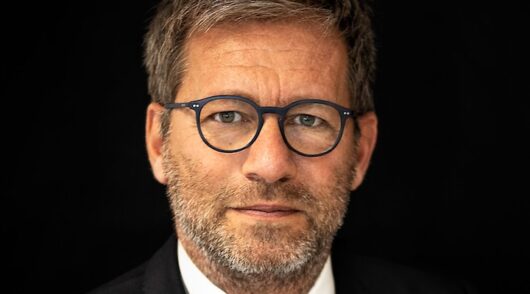
Following a turbulent year, the internal appointment of Paul Bradshaw as Super Retail Group managing director and CEO is marking a cultural reset for one of Australia and New Zealand’s largest retail portfolios. The timing was inevitable yet symbolic. After months of reputational strain, including governance questions and an internal scandal, the company’s decision to promote from within suggests a deliberate gesture toward stability and trust. Bradshaw, currently managing director of BCF, s
BCF, steps into the role on November 1 following a global and local search process.
He brings more than 30 years’ experience across operations, strategy and store development, spanning Coles, ASDA and Safeway.
According to Super Retail Group, under his watch, BCF’s sales have climbed 85 per cent since 2019, and profit before tax has reportedly nearly tripled.
In a statement, chair Judith Swales described him as a leader who has an “exceptional understanding of retail, leads with a clear focus on the customer” and is “highly regarded by his team and peers”.
But beyond the metrics lies a deeper reading that this appointment may be re-establishing internal alignment
For Retail Doctor Group’s business development and knowledge management partner, Dean Salakas, the decision represents a pragmatic act of repair.
“In today’s world, you’ve got to have trust and alignment with your teams. When there’s a lack of trust, it’s never going to work,” Salakas told Inside Retail.
For a business whose brands, including Supercheap Auto, Rebel, BCF and Macpac, are woven into the Australian and New Zealand retail landscape, the challenge may be cultural coherence.
The trust equation
Salakas noted that while Bradshaw’s background signals operational depth, his real test will be how he evolves into a more outward-facing, customer-centred leader.
Recent Retail Doctor Group research suggests a growing number of retail leaders feel their organisations are becoming more customer-focused, a shift Salakas believes Bradshaw will need to amplify in his new role. “That’s probably the one thing that stood out for me from this appointment … we may see some growth there from him personally becoming more customer-focused,” he said.
He believes the board’s decision was less about technical skill than about credibility.
“They would have been looking for trust. And I’ve got a feeling he has it. He’s obviously built it from executing,” Salakas said.
“[Bradshaw is] probably very adaptable and will lean into what is required from an organisation like Super Retail Group.”
A culture reset
After a year shadowed by workplace investigations and governance scrutiny, the internal appointment also offers an opportunity for cultural renewal.
Salakas suggested the leadership change will likely trigger a deeper internal recalibration, noting that shifts in structure and culture are almost inevitable.
The appointment, he said, gives the organisation room to reset, to rebuild trust with investors and stakeholders through visible change and renewed alignment within its executive ranks.
That process will likely involve renewed focus on communication, research and employee-led cultural assessment.
Super Retail Group is expected to focus inward, driving transformation through its existing internal teams.
“I think there’ll be governance changes … and a very big focus on culture.”
Beyond the boardroom, Bradshaw inherits a company in relatively strong financial health. In FY25, Super Retail Group lifted sales 4.5 per cent to $4.07 billion, with online revenue surpassing $520 million.
Yet profitability dipped, net profit after tax fell 4 per cent, reflecting tighter margins and cost pressures across its store network.
Salakas believes that the balance between performance and growth will define Bradshaw’s early tenure.
“Given they’ve got such a good brand, having someone to come in and steady the ship is the obvious choice,” he said.
“Post-Covid-19, most people had a really good year, then two or three really bad years. Now we’re seeing growing sales again. When things are going badly, there’s an internal focus on cutting costs. Now we’re in the reverse – the strategy will need to be focused on growing sales in a good market.”
For Bradshaw, the challenge is not simply to stabilise but to steer.
“His focus will need to be on the customer and growing sales in a market that has a few tail winds behind it,” Salakas added. “He’s going to need to win when the market’s good.”
Continuity and change
Bradshaw succeeds interim CEO David Burns, who returns to the CFO role.
In his first statement as incoming CEO, Bradshaw said, “It’s a privilege to lead a business I know so well and believe in so deeply. My focus will remain on delivering value for our customers, supporting our team, advancing our culture and driving sustainable returns for shareholders.”
Bradshaw’s focus on advancing culture is an acknowledgement of the road ahead. The success of his leadership may touch on operational prowess, but it will depend more on moral gravity and the capacity to rebuild belief from within.
Or as Salakas put it, “To be an executor, you’ve got to have trust, and your team’s got to get on board with the mission and come along with you. It starts at the top.”