Australia’s biggest pharmacy chains are starting to look less like dispensaries and more like department stores with premium beauty at the front, clinical services down the aisle and loyalty programs incentivising customers to shop in-network. The shift has implications for shopping centre tenancy mix, brand distribution and the customer journey, with Chemist Warehouse and Priceline firmly in the lead. The catalyst has been structural. The Australian federal government’s 60-day d
-day dispensing reform, announced in late 2023 and fully phased in by September last year, doubled the supply of hundreds of medicines through the pharmaceutical benefits scheme (PBS).
In March last year, the government announced a boost to pharmacy funding under the “eighth community pharmacy agreement”, a five-year deal from July 1, 2024, to June 30, 2029, between the federal government and the Pharmacy Guild that locks in how pharmacies are paid to dispense PBS medicines and deliver programs.
This reform is part incentive and constraint for pharmacies, as fewer repeat scripts mean less dispensing income and less frequent trips. However, pharmacies’ investment in front-of-store retail offerings, health services and loyalty programs over the last few years may help to offset that decline.
The department store-pharmacy hybrid takes shape
Both Chemist Warehouse and Priceline have extended their beauty strategies into curated edits in recent years; Chemist Warehouse through its Ultra Beauty concept and Priceline with Atomica.
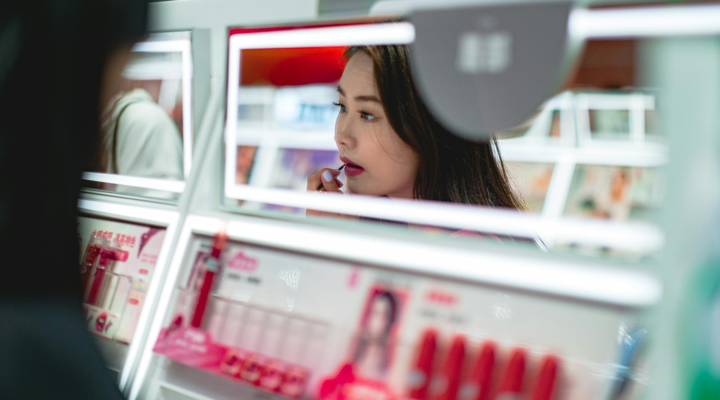
This indicates a deliberate move to elevate beauty from an aisle to a destination. Those brand moves now shape what shoppers encounter in-store, from staffed counters to premium fragrance walls.
By offering in-store beauty services alongside health checks, both retailers are nudging the channel toward subscription-style wellness. In each case, services become traffic engines and margin protectors.
In an announcement in October last year, Priceline signalled a brand refresh as well as deeper investment in leading health and beauty products.
“Nobody else in the market offers the combination of health expertise and beauty experience – at an affordable price point – that Priceline Pharmacy does,” the company’s retail director Richard Pearson said in an announcement.Chemist Warehouse, having debuted on the ASX following a $32 billion reverse takeover with Sigma Healthcare in February this year, has solidified itself as a pharmacy behemoth.
Sigma Healthcare CEO Vikesh Ramsunder also emphasised Chemist Warehouse’s ambition to offer premium brands and a wide product range.
“We delivered robust sales growth in the franchise store network across the major product categories including beauty, vitamins and supplements, healthcare/medicines, the baby/children category and fragrances,” he said in the company’s FY25 results release.
Large, high-traffic locations including Bourke Street in Melbourne and Pitt Street in Sydney, now mix pharmacy, mass beauty, prestige fragrance and devices (from hair tools to hearing aids) under one roof.
Long trading hours and value credentials give these retailers department-store breadth without department-store friction.
Who benefits and how?
Chemist Warehouse: With the Sigma Healthcare merger creating a wholesaler-retailer platform, the network gains leverage on range and cost across the company’s franchised and affiliated sites. This emphasises that the playbook is built for speed.
Priceline: Sister Club’s members have exceeded 9 million, which proves a strategic asset in their own right. A refreshed “health + beauty” stance, new brand wins, such as Clinique, and staffed beauty services emulate department-store counters while staying price accessible.
Landlords and precincts: Pharmacies act as daily-needs anchors with “eventable” beauty and clinical touchpoints, lifting dwell time and cross-shop for nearby specialists.
As extended scopes of practice stick and expand, health-service footfall rises and with it, demand for better wayfinding, booking and privacy design inside centres.
Why now
With the 60-day rule reducing repeat dispensing revenue, pharmacies are rebalancing into high-margin beauty, private label and health service clinics, but why now?
Customer behaviour is a contributor, with post-pandemic shopping leaning into neighbourhood convenience and health. Pharmacies are now expanding into prestige beauty and clinical services.
Consolidation and scale are also reshaping pharmacy. The Sigma–Chemist Warehouse merger, approved with undertakings, has also created a national platform able to roll out new formats, banners and services at pace.
It’s the same “test, learn, scale” playbook that once cemented department stores as category authorities.
Now, pharmacies are applying it to health and beauty, underpinned by data-driven loyalty schemes.
For retailers, the evolution of the pharmacy format opens new doors and will most likely impose new standards.
For malls, pharmacies are becoming genuine anchors. They deliver daily-needs footfall and programmatic events that retailers nearby can plug into.
Leasing teams may rethink adjacency placing beauty, optical and health foods within a pharmacy’s orbit while using extended trading hours and services to stretch the daypart.
Australia’s pharmacy leaders are no longer content to be dispensaries and are morphing into part-clinic, part-beauty hall and everyday emporium. As policy changes somehow squeeze the old margins, the new strategy is about curation, experience and loyalty.
Chemist Warehouse and Priceline may be setting the standard, but the trend is quickening. The story of modern Australian retail might just be told in the aisles of the pharmacy, not in scripts and labels, but in services, shelves and wellness.