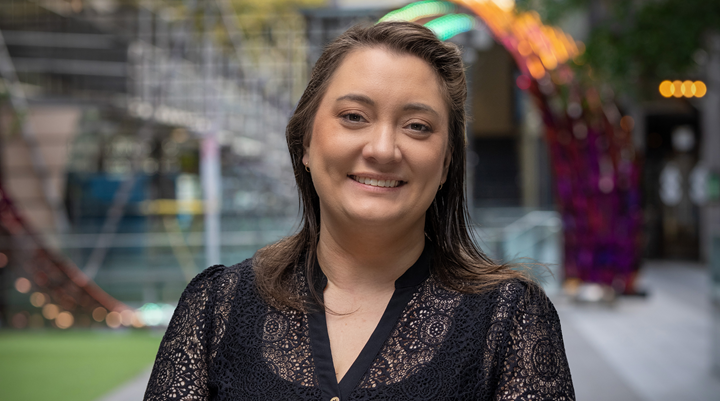
When Christina Langdon took a job at Hoyts at 15, she was dreaming of becoming a photographer. By 16, she told her parents she wanted to work at the cinema for a living. She went on to qualify as a photographer anyway and studied full time, which is how she found herself declining a promotion at Hoyts Eastland. However, Langdon was deemed such a perfect candidate that the team held the job open until she could finish. By 23, she was managing her own Hoyts cinema. This month, 24 years after
after joining the crew, Langdon was promoted to Hoyts’ director of operations, overseeing 62 cinemas across Australia and New Zealand.
In this interview, Langdon spoke with Inside Retail about how she learnt to resist the urge to fix every problem at work herself, what guest reviews tell her about life on the cinema floor and the importance of writing down priorities every morning before opening her inbox. “It’s easy to fall into the trap of spending the entire week reacting,” she said.
Inside Retail: What did you think you’d do for a living back when you first joined Hoyts at 15, and when did you start to see a career in the job you already had?
Christia Langdon: Growing up, I always wanted to be a photographer. I’m actually qualified in photography and spent time working in the field. However, I loved Hoyts from the moment I started working here, and it was that passion which inspired me to study hospitality, management and event management.
By the time I was 16, I remember telling my parents that all I wanted to do was work for Hoyts; I could already see a future for myself here.
IR: What did working with customers in the early years of your work at Hoyts teach you that still informs a decision you make today?
CL: One of the first things I learnt is that great guest experiences start with our team. Making sure our people feel supported and have the training and tools they need to do their jobs well is essential.
Another lesson from my time working in customer-facing roles is that guests come to the movies for something special that goes beyond the movies themselves. Being part of that experience and seeing just how much our guests love our cinemas is what it’s all about for me.
The final, and possibly most important, lesson is that the little things matter. Whether it’s greeting guests with a warm welcome, taking the time to listen or providing a helping hand to resolve an issue, these small interactions make a big difference to someone’s visit. Those early day-to-day exchanges still remind me to consider how every decision will ultimately impact the guest.
IR: You became second-in-charge at Eastland four years after joining. How did that first promotion come to you? Was it something you asked for?
CL: I transferred from Forest Hill to Eastland as a duty manager when I was 18 and loved every minute of it.
About a year later, the second-in-charge position became available and my manager at the time, Wayne, asked whether I would be interested. I initially declined because I was studying photography full-time and couldn’t take on the role with my schedule.
However, the team was incredibly encouraging, with a strong belief that I was right for the role, and they held the position for a few months so I could finish my studies and commit to working full-time. That support made a real difference, and from the moment I started as second-in-charge, I was hooked.
I then went on to work across several other locations before becoming a location manager at 23.
IR: What was the hardest thing to learn when you went from working alongside people to being the person they turned to when they needed help?
CL: The biggest learning curve was understanding that being helpful didn’t always mean I had to do everything on my own. When someone came to me with a problem, my instinct was to jump in and fix it because I knew the job and it often felt like the quickest solution.
Over time, I learnt the importance of taking a step back, asking questions and helping those around me build the confidence to find their own solutions.
IR: When you went from running one location to overseeing teams across two states, what did you have to learn to leave in the hands of your local managers?
CL: The most important lesson was letting go of the ‘how’. When I was running one location, I was accustomed to being across every detail. Going from this level of management to overseeing multiple locations meant learning to trust my managers to make the right decisions and recognising that their approach could be different from mine while still delivering a great result.
I had to give them ownership of day-to-day operations, rostering, guest experiences and how they led their teams. My role became more about setting clear expectations around standards and commercial performance, while providing support and accountability. Our local managers know their teams and communities best, so giving them the space to use that knowledge is incredibly important.
IR: Considering you now make decisions across 62 locations, how do you find out what’s making the job harder for the people dealing with customers every day?
CL: I think it’s important to look at both the data and the reviews written by our guests. The numbers may highlight where something needs attention, but the feedback helps us understand the ‘why’.
I regularly review the guest feedback we receive and seek additional context and input from my direct team to identify any recurring challenges. Our frontline teams have the most direct view of what’s working and what’s making their jobs harder, so their perspectives are essential. I want to understand where processes might be creating extra work or getting in the way of looking after our guests.
However, hearing feedback is only half the job. We close the loop by telling our teams what guests have said and what we’re doing about it.
IR: What’s a habit or ritual that helps you stay focused at work that you’d recommend to other leaders?
CL: Prioritisation is key as a leader. Each week, I identify three things I want to achieve that will make the biggest difference and define what a positive result looks like.
Every morning, before opening my inbox, I write down my priorities for the day and separate the must-dos from the tasks that can wait. With 62 locations, there is always something urgent, and without taking the time to set clear priorities, it’s easy to fall into the trap of spending the entire week reacting.
Having that priority-based structure helps me stay focused on the work that will have the greatest impact while still making room for issues that need immediate attention.