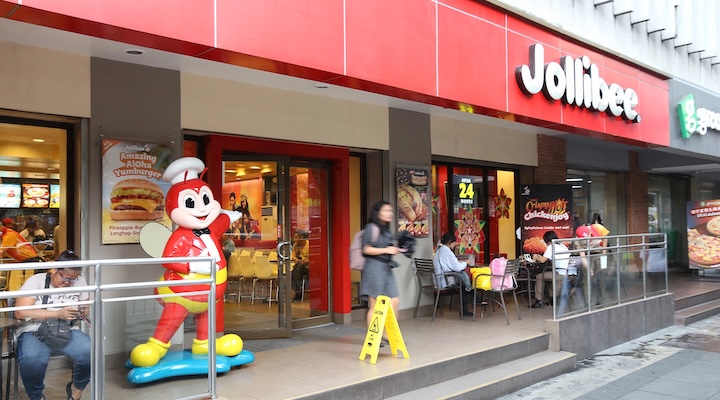
The most talked-about fried chicken in Australia this week is not yet sold anywhere in the country. On a Sunday morning in Pasay City, Metro Manila, Anthony Albanese held a piece of fried chicken up for the cameras. The Australian prime minister, in town for the Asean Summit, had just watched Jollibee Group sign two franchise agreements that will take the Philippines’ largest restaurant brand to Australia. “It’s fantastic food, fantastic food, fantastic food,” he told the room. As
m.
As co-founder and managing director of Happy Food Group, Jollibee’s exclusive franchisee for Victoria, Chris Ong now has a brand Australians are suddenly talking about, but no announced locations, no opening date and no public store target for his state.
“We’re excited to make it as accessible to as many people as possible, but [it] comes down to what sites are available and how the market responds,” he told Inside Retail.
The Philippines’ largest restaurant brand arrives with a devoted diaspora, three straight years at the top of a major US fried chicken poll and a parent company that now earns almost half of its system-wide sales outside the Philippines.
It also walks into one of the most concentrated fast-food markets in the developed world, where KFC owns the chicken category and local hospitality operators, closing in large numbers, are in no mood to cheer a foreign chain.
The deal
The agreements, signed on November 15, give Happy Food Group exclusive rights to Victoria and Lucky Bee Australia rights to designated parts of New South Wales. Together, the two partners aim to open 35 stores within five years, which Jollibee estimates will represent about A$60 million in investment and around 900 jobs.
“Today, bayanihan meets mateship,” Jollibee Group global president and CEO Ernesto Tanmantiong said at the signing, pairing the Filipino tradition of neighbours pulling together with its Australian equivalent. “United by shared belief, we are stronger together.”
Beyond the 900 direct roles, he said, the supply chain effect would mean thousands of jobs in Australia. His office described the brand as “a familiar name for many Filipino Australians”.
Neither Jollibee nor its partners have given opening dates or locations, and Ong will not put a number on Victoria’s share of the 35 stores or commit to a timetable.
“The rollout will depend on how the market takes us,” he said.
“We are exploring all formats, all locations,” he said. “Jollibee is a brand for all people and cultures, united in their love for amazing fried chicken and other delicious products, so we will go where it makes sense and where opportunities arise.”
The rest of the country is still in play. Jollibee is reported to be seeking partners for other Australian states, leaving Queensland, Western Australia and South Australia unallocated for now.
A long road to Australia
Jollibee has been planning its Australian entry for more than a decade. In 2015, The New Daily reported plans for an Australian launch in 2017. A development application for a site in Campbelltown, in Sydney’s south-west, was lodged in 2021 but did not progress, which the company later put down to administrative challenges. In late 2025, developer PMG Group secured council consent to replace a former Sizzler on Harbord Road with three fast-food buildings for Jollibee, Taco Bell and Krispy Kreme. That approval is valid until July 2029, but no construction start has been set, according to Franchise Executives.
“We’ve been planning to enter Australia for quite some time now,” Dennis Flores, Jollibee’s president for Europe, the Middle East, Asia and Australia, told The Philippine Star in 2024.
Some coverage this week described Campbelltown as the confirmed first store. Jollibee has not confirmed any first location. Campbelltown also sits in New South Wales, which falls to Lucky Bee rather than Happy Food.
Beyond the diaspora
Jollibee’s starting customer base is not in question. According to the Prime Minister’s office, more than 400,000 people living in Australia were born in the Philippines, making it the country’s fifth-largest diaspora community.
Greater Sydney has the largest Filipino population, and Victoria the second largest: 95,186 Victorians reported Filipino ancestry at the 2021 Census, according to the Victorian government, with the biggest clusters in Melbourne’s outer south-west and south-east, led by Wyndham (10,628) and Casey (9485).
But 35 restaurants cannot run on nostalgia alone, and Ong is clear that the target is the wider market.
“It truly appeals across broad and diverse people,” he added.
“That Jollibee is not ‘just another fried chicken shop’,” he said, when asked what non-Filipino customers will find surprising. “There is something special about the energy and culture the brand has, and what you feel from the staff when visiting the stores in other countries (that we want to bring here!).”
He points to the menu as the other draw.“Jollibee offers are also amazing: crunchy and juicy Chickenjoy fried chicken with the right amount of spicy kick and unique but familiar flavours like the Pineapple Quencher and Peach and Mango Pie.”
The harder sell may be Jollibee’s best-known oddity. Its Jolly Spaghetti, made with a sweet, banana ketchup-style sauce and sliced hot dogs, is a childhood staple in Manila and a talking point everywhere else. Ong presents it as part of the menu’s breadth. “It has something for everyone: beef burgers, their signature Chickenjoy fried chicken, and the famous slightly sweet, definitely unique Jolly Spaghetti.”
The prime minister problem
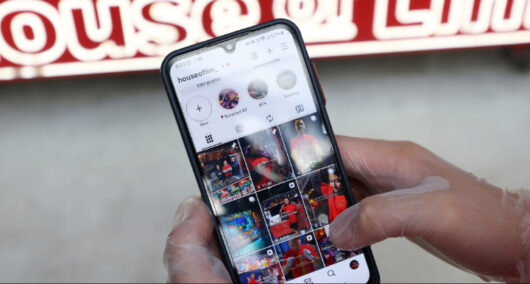
Then there is the politics. Albanese’s Instagram clip, which showed him eating with Jollibee staff, drew more than 71,000 likes and a wave of confused comments, SBS News reported, including one from comedian Ben Sorensen: “Was this a sponsored post?”
Hospitality operators were less amused. Sydney chef David Lee criticised the post on Instagram, citing the closure of nearly 4000 cafes, restaurants and takeaway businesses in the 12 months to July 2026, the Daily Tribune reported. Asic insolvency data cited by The Nightly shows 2078 hospitality businesses collapsed last financial year, with 625 more since July 1. Anne Nalder of the Small Business Association of Australia told SBS News that the promotion was disappointing at a time when the food industry’s small businesses are struggling with high costs.
What Australia means for Jollibee
Australia will be a small market for Jollibee Foods Corporation, which runs 7413 stores outside the Philippines. But it is a useful one. Overseas markets brought in 49.1 per cent of group system-wide sales in the September quarter, and the company is working towards a possible Hong Kong listing of its international business by late 2027. Under the franchise deals, the Australian partners pay for the stores, so Jollibee gets a new Western market without spending much of its own money.
Whether Australians take to it is another matter. Jollibee has talked about coming here for more than a decade, and this week’s announcement is the closest it has come.
“I’m excited to introduce Jollibee to Australian customers,” Ong said, “and look forward to them giving the menu a try.”