
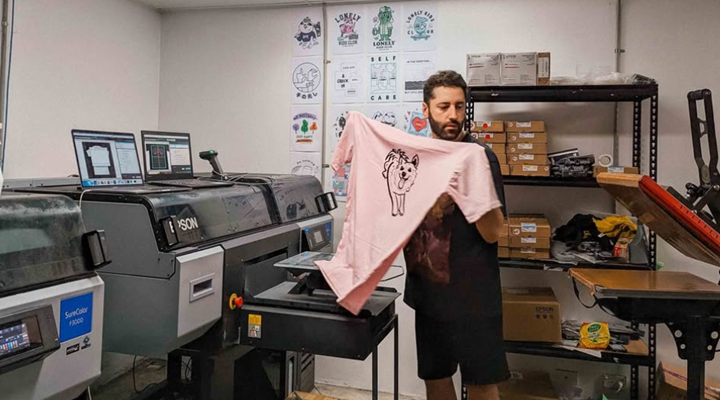
At shopping-centre T-shirt printing kiosks, Warwick Levy turned the exuberant internet slang of the mid-2000s into something he could wear. “It was a way to break through my social anxiety that I had, where I felt a bit awkward around other people – like a starting point to show a little bit about who I was and my identity,” Levy told Inside Retail. Back home, he concocted imaginary clothing ranges on the family computer using Microsoft Paint, eventually launching his brand Lonely Ki
Kids Club in 2011. Today, the independent Sydney label’s designs come from Levy, in-house artists and external collaborators. Levy explained that the team never follows trends and just does what they’re excited about. “Part of that for me is this idea of trying to run my own race,” he explained. “I would never want to release something that looks like it could be someone else’s work.”
Each garment is printed and made-to-order, keeping finished stock to a minimum and diminishing the familiar retail pressure for clearance sales. Australian clothing stewardship scheme Seamless estimates that 47 million imported garments went unsold in Australia in 2024, while 220,000 tonnes of clothing went to landfill.
But that carefully managed operation faced a problem Levy had not anticipated. He learnt the label’s designs were selling on Temu when a collaborating artist asked why their work was available there at half the price. The artist wanted an explanation, and in tandem, Levy needed one himself.
“I didn’t really know how I was meant to handle it because there isn’t really a direct way to talk to anyone there [at Temu],” he told Inside Retail. Thousands of copies of Lonely Kids Club’s designs, complete with the Sydney label’s photographs, product descriptions and brand name, were listed on the marketplace giant.
For over a decade, Levy had developed a business that customers and artists could trust. Now, alongside designing, printing and packing orders, he had to work out how to protect it and eventually write the guide he wished someone had given him.
A whole catalogue, copied and pasted to Temu
The brand’s Shopify figures showed sales of the popular “Get in the Van” design falling from AU$75,000 to AU$16,000 across the periods he examined, a decline he attributes to Temu’s copies.
The repercussions soon pivoted to service when a small number of buyers approached his business about poor-quality purchases made through Temu.
Levy responded by adding website protections intended to impede automated scraping and writing a guide with reporting instructions and templates for other designers. “That was the guide I didn’t have that I wished I had,” he said.
Temu told the Australian Broadcasting Corporation (ABC) in September that it had removed the reported listings and prohibited products infringing intellectual property rights. Levy says copies continue to appear, requiring further reports.
The parts that take more work
The copied listings reproduced the label’s artwork and branding, while Levy’s daily work involves requests that go further than the design on a shirt. For customers who find standard necklines uncomfortable, the team sources scoop-neck or V-neck alternatives and prints their orders at no extra charge. “We have to order those in and make sure we do it for their product, and we do all that for them for free every time because we know how important it is to them,” he said.
The brand also offers 100-day returns and its Sloth Coins loyalty scheme points (that never expire), but its approach to retaining customers also rests on the reassurance that someone will help when a purchase goes awry.
“I think when you give such a good customer experience to people, they will come back because they know that they’re going to be supported, looked after, and that’s always been my approach,” Levy said. He added that some customers have stayed loyal to the brand since 2012 or 2013.
A return on generosity
Through the ‘Lonely Kids Club Club’ Facebook group, customers suggest shirt ideas that Levy and two other artists develop in the Sydney suburb of Artarmon, sometimes producing about 15 designs in a day and crediting contributors online.
From October 29 to November 1, the business extended that participatory ethos into fundraising, pledging 100 per cent of profits from website sales to Orange Sky, an Australian charity which provides laundry, showers and conversation for people experiencing homelessness and hardship.
For Levy, that generosity is just part of how he runs his business. “A short-term loss is worth a long-term gain.”


