
On the first day of KFC’s Oreo Original Recipe chicken burger in August, Yum China sold more than 1.5 million of them, roughly three times what last year’s original version managed on its launch day. “Trust me, it does taste pretty good,” chief executive Joey Wat told analysts on Tuesday’s earnings call. Customers keep coming, and novelty still pulls them in. But they spend less each visit, and restaurants that have been open for more than a year are taking in less money than the
an they did 12 months ago.
Yum China’s same-store sales for the quarter ended September 30 were down 3 per cent. Yet, profit still climbed. Operating profit rose 13 per cent to US$451 million.
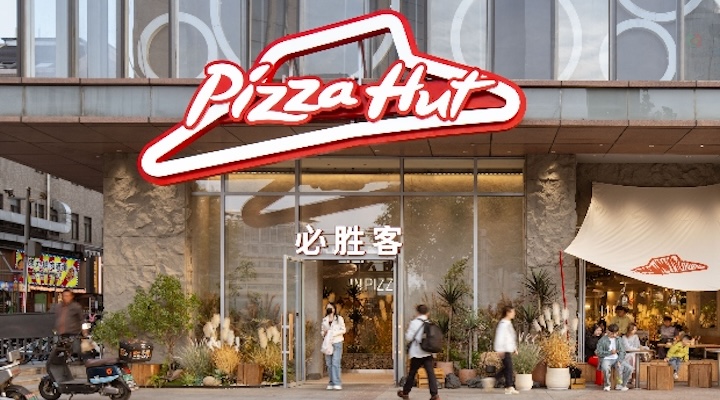
As of the end of the quarter, the company runs 14,307 KFC outlets and 4740 Pizza Hut restaurants across Mainland China.
What dragged sales down
Yum China pointed to two factors.
In mid-2025, China’s delivery platforms, including Meituan, Alibaba and JD.com, were spending heavily on subsidies to win users, pushing extra orders through chains such as KFC at little cost to diners. As those subsidies were pulled back, the extra orders went with them, leaving this year’s numbers measured against an inflated base.
“Delivery subsidies also scaled back faster than expected,” chief financial officer Adrian Ding said.
The second was the weather.
“August was more challenging than expected,” Ding said, pointing to “frequent adverse weather” in East China, which he described as “one of our strongest markets”. August is also the busiest trading month of the year.
The slowdown is plain against the previous quarter. In April to June, Yum China reported same-store sales up 1 per cent, transactions up 5 per cent and system sales up 6 per cent. In the third quarter, system sales growth halved to 3 per cent, driven mainly by new stores.
Ding said trading improved in September, and that October was “broadly in line” with internal expectations, with “no negative surprise or positive surprise”.
Small orders, smaller bills
The more lasting change is in what people buy. At KFC, the average ticket fell 5 per cent to 36 yuan. At Pizza Hut, it fell 8 per cent to 65 yuan.
Much of this is by design. Yum China has been pushing value-for-money offers and building add-on formats aimed at solo diners, snackers and coffee drinkers. Its KCoffee cafes, run alongside KFC restaurants, now number more than 4000. KPro, a lighter menu built around energy bowls, sandwiches and high-protein smoothies, has passed 700 locations. Pizza Hut’s Burger Bar counters number more than 300 across 50 cities. Each brings in orders that are smaller than a family bucket or a large pizza.
In the earnings release, Wat said the company had “captured incremental demand across a broader range of consumption occasions such as smaller orders and solo dining”. On the call, she set out the ambition for KPro.
“We aspire to be a market leader in China’s promising and underserved light meal market.” The targets are large. Management wants KCoffee above 5000 sites by the end of next year, KPro at 1500 and Burger Bar at 1000 over the same period.
Pizza Hut shows the trade-off most clearly. It sold 17 per cent more pizzas in the first nine months than a year earlier, with sales of its one-person pizza rising 40 per cent.
“In this market, anything double-digit, not to mention 40 per cent, is something that we are excited about,” she said. But because many of those pizzas are smaller and cheaper, Pizza Hut’s system sales grew just 1 per cent. The chain’s burgers are expected to bring in more than 1 billion yuan this year, around 5 to 6 per cent of Pizza Hut sales.
“Dine-in and takeaway performance improved sequentially, bucking the previous trend,” Wat said in the release.
KFC’s car-side pickup service now runs at more than 9000 stores, and more than 12 million members have used it this year. Delivery still accounted for about 54 per cent of company sales, up from 51 per cent a year earlier but unchanged from the second quarter. Active members of KFC or Pizza Hut rose 6 per cent to more than 278 million.
The Pizza Hut windfall
On August 7, Yum China completed its purchase of the Pizza Hut brand in Mainland China from Yum! Brands. Owning the brand means Yum China no longer pays licence fees on Pizza Hut sales. With less than two months of ownership in the quarter, that alone lifted group restaurant and operating margins by about 30 basis points.
Pizza Hut’s operating profit rose 29 per cent to US$73 million.
“We are truly excited to buy back the brand,” she said. This week Pizza Hut began selling frozen durian through retail channels. “It smells and tastes like durian ice cream, but it’s real durian frozen,” she said.
“Now we own the brand, we can make this kind of decision and try new things much, much faster.” The company plans to take Pizza Hut retail products beyond e-commerce and its own restaurants into supermarkets and other offline channels.
A record building spree
While older restaurants struggle for growth, Yum China is opening new ones faster than ever. It added 692 net new stores in the quarter, a quarterly record, taking the total to 19,989. About 44 per cent were opened by franchisees.
The company raised its full-year target for net new stores from 1900 to more than 2400, which would take it past 20,500 restaurants by December and closer to its goal of 30,000 by 2030.
Much of the growth is in smaller cities. Ding said Yum China had developed slimmed-down formats for lower-tier markets, including KFC Small Town and combined KFC-Pizza Hut stores, which made up more than half of this year’s openings in those cities. Some KFCs there now carry a simplified menu where “food is mostly made to order to fit the lifestyle in smaller cities”.
What comes next
The fourth quarter will be a harder test. Same-store sales in the last quarter of 2025 stood at 103 per cent of the prior year’s level, which Ding described as “meaningfully higher” than the other three quarters.
“It’s a tough lapping, but we are working hard to try to achieve a sequential improvement,” he said. A more widespread autumn school break in November could help.


