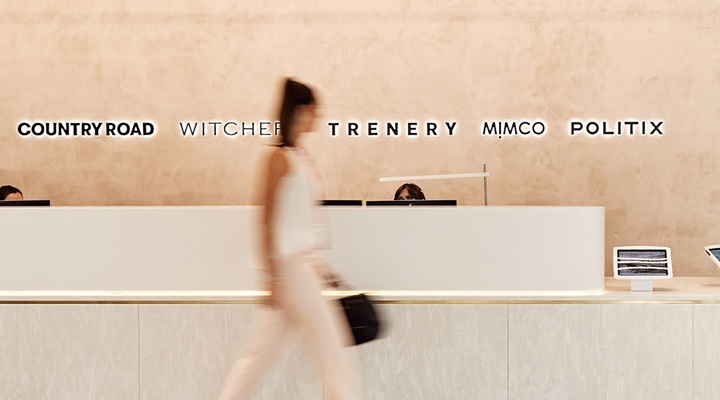
Earlier this week, Country Road Group announced it would remove nearly 100 of its 283 concessions from David Jones, significantly reducing the presence of Witchery, Mimco and its namesake brand across the network. It’s the latest in a string of big names to pull back from the iconic department store, following Dior, Gucci, Chanel and even RM Williams. Collectively, the exits paint an ominous picture and invite the obvious conclusion that David Jones has a problem. But retail strategist B
t Brian Walker believes they deserve a closer look. “The obvious narrative: another sign of David Jones’ problems,” Walker wrote. “But is it, entirely?” Country Road Group’s own results make his question worth asking. The group generated about AU$1.07 billion in revenue in FY26 but only AU$2.3 million in adjusted EBIT, a margin of just 0.2 per cent. For a retailer of that size, the numbers suggest Country Road Group has plenty of reasons to rethink where and how it sells.
The brands underneath that umbrella are also producing fairly disparate results. Witchery’s comparable sales rose 9.5 per cent, and Politix grew 10.2 per cent, while Country Road paved only slightly ahead. “Same economy. Same parent company. Much of the same infrastructure. Very different brand outcomes,” Walker wrote. In other words, the David Jones story may only explain part of what is happening.
Each concession still has to justify its place, especially when 28 per cent of Country Road Group sales are already online. “Physical distribution for distribution’s sake matters less,” Walker wrote, adding that reducing its David Jones footprint may be a sensible choice. Country Road Group itself said some changes involve locations where its brands already have a strong presence elsewhere. That raises an awkward question for the concession model: if a customer can buy from the brand’s own shop around the corner, or from its website without leaving home, how much floorspace does it really need?
David Jones, of course, brings its own baggage to this argument. It recorded a pre-tax loss of AU$95.5 million in FY25, up from AU$74.1 million the previous year. Australian labels Effie Kats, Acler, Significant Other and Aston Studio have also left for exclusive department-store deals with Myer.
Myer’s announcements garnering attention
Brand departures are not unique to David Jones. In FY2026, Myer exited 13 own-label brands, while Mecca ended its 17-year partnership with the retailer. But Myer also introduced 31 fashion brands, 36 beauty brands and launched a new private-label offering. The difference is that Myer has a wave of arrivals to set against its exits. Country Road Group’s concession closures raise the question of how David Jones will fill the space, and whether the replacements can give customers fresh reasons to visit.
David Jones says the changes fit within Inspire30, its five-year plan built around premium positioning and omnichannel growth. “As part of a review of the portfolio, trading terms, and business model, we are working collaboratively with brand partners about an adjustment in their exposure across our store network,” a spokesperson said, adding that brands will be concentrated in stores with “the strongest potential for growth”, alongside more exclusives and, like Myer, a private-label range.
Or, as Walker put it bluntly, distribution doesn’t create relevance. “Great brands make distribution relevant.”
That leaves each business with something to prove. Country Road Group needs to turn more than AU$1 billion in sales into a healthier profit. David Jones must show that a smaller concession network can strengthen its department-store offering, while Myer needs its new brands to deliver more than a longer list of names.
All three face the same underlying question: which brands make their square metres worth paying for?