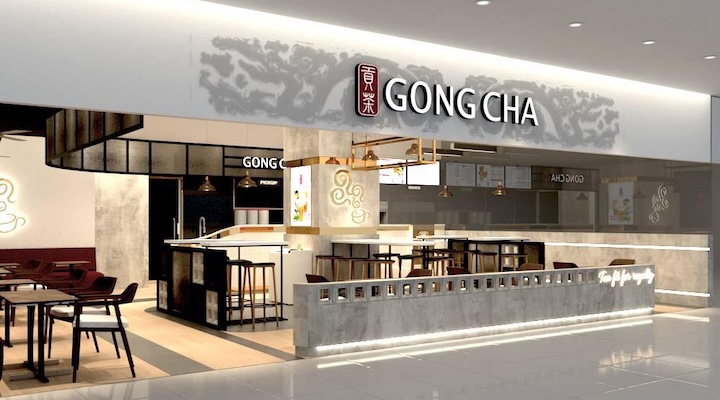
Bain Capital has agreed to acquire Gong Cha from private equity firm TA Associates for an undisclosed sum. The deal is expected to close in the fourth quarter of this year. The bubble tea chain has been sold four times in 12 years. The franchisee that bought the franchisor Gong Cha opened in Kaohsiung in 2006. The turn came in 2012, when Australian former banker Martin Berry and his wife, Kim Yeo-jin, took the master franchise into South Korea. Unison Capital’s Korean arm, later UCK Partners,
artners, bought control of Gong Cha Korea for KRW34 billion (US$24 million) in 2014 and in January 2017, that Korean unit paid KRW40 billion (US$28.2 million) for 70 per cent of Royal Tea Taiwan, which owned the brand itself.
The franchisee had bought the franchisor. Two years later, UCK was sold to TA Associates for about KRW350 billion, close to five times its money. TA moved its headquarters to London and grew the network from 1201 stores to nearly 2200 across 33 markets.
What Bain is actually buying
Bloomberg reported in March that TA was working with JPMorgan on a sale that could value Gong Cha at about US$2 billion. Gong Cha Global’s revenue in its 2025 financial year was roughly US$217 million, up 14 per cent, with EBITDA of about US$70 million, according to Seoul Economic Daily.
The media outlet reported on July 29 that several bidders had stepped back over price, including MBK Partners, which had sought a Korean co-investor but was constrained by regulatory scrutiny at home. Bain has not disclosed what it paid. However, according to Nikkei Asia, that figure is well below the $2 billion valuation sought by its owner earlier this year. Nikkei puts the price at more than US$635 million.
Where the pressure is coming from
South Korea, Gong Cha’s largest market by store count, with roughly 900 outlets, has been challenged by a new wave of Chinese brands expanding into the market.
Chabaidao entered the Korean market in 2024 and now operates around 20 stores, while rivals HeyTea and Mixue have reached six and 14 outlets, respectively. Chagee, known for its milk tea and branding inspired by traditional Chinese culture, has opened three stores in Sinchon, Yongsan and Gangnam. At the Yongsan I’Park Mall outlet, app orders were backed up to 1141 cups, with an estimated wait of 951 minutes, Seoul Economic Daily reported.
What arrives with those brands is a different cost structure. Mixue, Guming and Chagee earn much of their money supplying franchisees with tea leaves, syrups, packaging and equipment through vertically integrated networks, turning each new store into a recurring product order rather than a licensing agreement. It funded listings in Hong Kong and New York, and it funded price competition that Gong Cha cannot match on royalties alone.
Last October, all 29 of Gong Cha’s Singapore stores closed at once when the master franchise agreement lapsed, and a relaunch under new partners was set for this year. When a licensor loses an operator, it loses the market overnight.
Buying back the model
The brand has spent the past year rebuilding the parts of the business it does not control, and doing it in the markets where the payback is clearest.
In March, Gong Cha acquired the master franchise rights to 170 US stores across 13 states, bringing the territory in-house. TA’s exit statement describes the purchase of both US East and West Coast master franchisee rights as a central value-creation move of its ownership.
The Gong Cha 2.0 “Digital Kitchen” format, built around automated drink dispensing, is now live in 250 stores. Gong Cha has more than 240 US outlets across 23 states, Washington, DC and Puerto Rico, and says it is on track to exceed 500 in the Americas by 2028, against a stated goal of 1000 in the US.
Bain’s stated priorities are Japan, Korea and the US, and its Asian consumer record, with Domino’s Pizza Japan, family-restaurant group Skylark sitting squarely in the first. Chinese business daily NBD reports it is expected to overtake Korea as Gong Cha’s largest revenue market this year, and Korean reports suggest several bidders ran due diligence primarily on the Japanese unit, some preferring to buy it alone.
Further reading: How Berjaya Food’s Paris Baguette exit is a lesson in franchise triage.

![A headshot image of Hannah Mercer wearing a purple hoodie against a gray background. ]\\](https://insideretail.co.nz/wp-content/uploads/2025/10/hannah-mercer-gymshark-530x294.jpg)