Walk into almost any good store, and you’re standing inside a machine built to make you feel something. The music was tested for tempo and mood, the lighting was calibrated to flatter the product, the scent was diffused at threshold levels to trigger emotional recall, and the merchandising was choreographed to guide your eye, your foot and your hand towards a decision. I’ve spent 25 years helping build environments exactly like that. And here’s the thing almost none of us said out loud whi
while we were doing it: all of it was engineered for one kind of nervous system.
For roughly one in five Australians, an estimated 20 per cent of the population identify as neurodivergent, and that same carefully engineered environment doesn’t create connection. It actually triggers a stress response. That’s not discomfort or mild irritation. It’s a physiological reaction that can include nausea, heart palpitations and a nervous system locked into fight or flight. It’s wild, I know, and it’s important to note it’s not because the store is broken.
We’ve spent decades refining how environments make people feel, and we’ve just been refining for a brain that doesn’t actually exist – a single cognitive default that processes, filters and responds to stimuli the same way every time. That brain is a fiction, and designing for it costs more than most brands will ever see through their metrics or reports.
The invisible walkout
Here’s what makes this a commercial problem, not just a social one: neurodivergent customers don’t complain. They leave.
They don’t write a review about the fluorescent lighting or flag the overlapping audio – store music bleeding into PA announcements, bleeding into register beeps, bleeding into the coffee machine. They don’t tell your team that the layout change you made last Tuesday means they can no longer predict what’s waiting in aisle four and that the unpredictability alone is enough to keep them away.
They simply stop showing up. Or they come in at 7am when the store is empty, maybe switch to online or send someone else. The brand never registers the loss because the customer never puts it into words. They were too busy managing their own nervous system to give you feedback.
Research by Inclusive Change across 600 Australian shoppers found neurodivergent people consistently described shopping as stressful. And that’s not occasionally, or in certain categories, but as a defining feature of the experience. They spoke of avoiding shopping centres because of sensory overload. Stores were too confusing to navigate. Shopping wasn’t inconvenient; it was exclusionary.
And exclusion never shows up in your NPS. It shows up as customers who were never in your data to begin with.
So what’s actually happening?
A neurotypical brain filters on autopilot. It takes the register beep, the overhead announcement, the conversation at the next checkout and the hum of the fridge, and pushes all of it to the background without trying. It keeps what matters and drops the rest.
A neurodivergent brain doesn’t always get that option. Every input arrives at the same volume, with the same priority and urgency. The fluorescent flicker a neurotypical shopper has never once noticed is, for some, genuinely painful. The fragrance layering a merchandiser built to create “atmosphere” becomes a wall of competing signals the brain can’t sort. The overlapping sounds – music, announcements, beeping, chatter, trolley wheels and the buzz of the self-checkout – aren’t background noise. It’s foreground everything, all at once.
This isn’t a preference. It’s physiology.
And it extends far beyond the neurodivergent community as it’s formally defined. The new parent running on broken sleep, whose capacity to process stimuli has been cut in half. The elderly shopper whose sensory sensitivity climbs with age. Anyone carrying anxiety, grief, chronic pain or simply the accumulated fatigue of a hard week. The “average customer” most stores are built for is an abstraction – a statistical composite who doesn’t walk through anyone’s door.
Design for the average, and you design for no one in particular. Which is exactly what some stores feel like: built for a generalised human, not the actual humans standing inside them.
What does it cost the customer?
Most of the conversation about this stops at the moment itself – the overload and the decision to leave. The real cost runs further than that.
Neurodivergent people describe a “sensory hangover”, which is the aftermath of time spent in a highly stimulating space. They get home emotionally flattened, physically wiped out and unable to talk to the people around them. One grocery run can cost someone the rest of their day, and that’s not because the shopping was hard, just because the environment was hostile.
Sit with what that does to the things that actually drive behaviour. Three needs underlie every decision a person makes about where to go, whom to trust and what to engage with: autonomy, competence and relatedness. When an environment works, it feeds all three. When it doesn’t, it strips them out one by one.
Autonomy is moving through a space on your own terms, at your own pace, without having to manage your nervous system. The moment someone is spending half their bandwidth just staying regulated, they’ve lost the plot of their own visit. The store is happening to them; they aren’t choosing it.
Competence is the quiet confidence that you can find what you need and finish the task. Unclear wayfinding, unpredictable layouts and a floor plan that changed without warning don’t just frustrate neurodivergent shoppers; they make a simple errand feel almost impossible. And when something that should be easy feels impossible, what’s left behind isn’t annoyance. It’s shame.
Relatedness is the sense that you belong here, that the place was built with someone like you in mind. This is where the damage goes deepest. Neurodivergent shoppers talk about the constant work of masking – controlling their face, swallowing visible discomfort and performing “normal” so they don’t draw attention. That performance is the exact opposite of connection. It’s isolation in a room full of people.
When all three collapse at once, the customer doesn’t just disengage from the store; they disengage from the whole category. They build workarounds that cut your brand out entirely as an act of self-preservation. And you never find out it happened.
The brands getting it right
This isn’t a tier list. It’s a progression from retailers pulling the harm out to those building something better in its place.
Reduce the assault
Both Coles and Woolworths now run Quiet Hour five days a week, Monday to Friday, from 10:30 to 11:30am – lights dimmed, music off, register beeps silenced and PA announcements paused. Woolworths built it with Life Without Barriers and has rolled it out across more than 900 stores nationally, while Coles partnered with Autism Spectrum Australia.
It’s the most visible move in Australian retail, and it really matters. But let’s be clear about what it is. Quiet Hour is a time-based accommodation: for one window, the store agrees to be less hostile. That’s necessary. It isn’t a design philosophy, and it doesn’t change the environment. It simply suspends it for 60 minutes.
Give back control
Bunnings went a different way. It built sensory maps for every store in Australia and New Zealand, developed with autism organisation Amaze, showing exactly where customers will encounter brighter lights, louder noise and stronger smells, both online and in-store.
What’s clever is that it hands the customer information before they arrive – time to plan their visit and decide which route to take, whether to bring headphones and what to skip. It doesn’t change the environment either; it simply gives people the tools to navigate it on their own terms.
That’s autonomy handed back before they reach the door.
Design the environment itself
Aesop has never called itself neuro-inclusive. That’s not its language, and it’s not the stated intent. But the principles align with remarkable precision.
Every Aesop store runs on a controlled sensory palette. Natural materials such as timber, stone and concrete that don’t throw harsh light. Muted colours that lower visual competition. No background music in most stores and an unhurried service ritual built around one-to-one consultation rather than browsing pressure: low visual noise and the same spatial grammar across locations, with room for local context.
As a result, every sensory input is deliberate, limited and calibrated. Nothing competes or ambushes. And that’s not an accident of good taste; it’s emotional precision rendered in space, and it happens to be exactly what neuro-inclusive design looks like when it’s done at the level of philosophy, not policy.
I’m not arguing that Aesop set out to serve neurodivergent customers. The point, I think, is sharper than that: when a brand designs for emotional precision instead of sensory saturation, it builds a space that works for more brains by default, not through accommodation.
Build the product differently
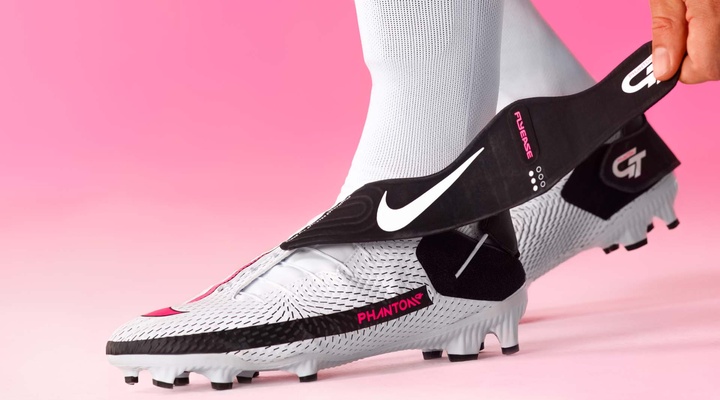
Nike’s FlyEase line started in the right place, designed not just for people with disabilities, but by them. Employees with disabilities, including amputees, shaped the specifications, functionality and messaging. It flipped the usual model, moving from non-disabled designers imagining adaptive needs to people with lived experience engineering for everyone.
Then the execution exposed the tension that matters here. Nike moved the language from “disabled athletes” to “athletes of all abilities”, and launched the Go FlyEase as a limited drop, which was instantly snapped up by resellers, putting the shoe out of reach of the community it was built for – inclusive design undone by exclusive distribution.
That’s the cautionary beat for anyone walking into this space. The intent to include counts for nothing if the system around it excludes, and neuro-inclusive retail isn’t just the product or the environment. It’s whether the whole experience, end to end, keeps the promise.
More recently, Nike launched Mind, a neuroscience-based footwear range developed over a decade using mobile brain-and-body imaging to map the sensory receptors in the foot and how they connect to cognitive state. Nike is designing at the seam between physiology and psychology. Wherever it lands commercially, the direction is the signal – a shift from designing for the body in motion to designing for the brain in context.
Create flexible access points
The Athlete’s Foot and Shoes & Sox now offer quiet fitting appointments in Australia, booked during off-peak periods, with trained staff in a calmer space. Low cost, high trust, and it completely flips the service model. Instead of asking the customer to tolerate the standard environment, it offers one built around them.
Westfield did the same with Sensitive Santa: pre-opening access for children with sensory needs, a quieter setting, minimal waiting and social scripts sent ahead. What’s particularly smart is that it extends inclusion to emotional peak moments, not just routine ones. Christmas shopping with a child who experiences sensory overload is something many families dread or skip altogether. Build an alternative way in, and you’re not just serving a segment; you’re telling a family they were thought about, too.
The reframe
Most of this conversation still lives in the language of accommodation. Quiet hours. Sensory kits at the service desk. Staff training modules. Necessary steps, and the retailers who do them deserve credit for leading.
But accommodation is a floor. It was never the ceiling.
The brands that will own this space are the ones that stop asking, “How do we make our store less hostile for neurodivergent customers?” and start asking, “How do we design for the full spectrum of how humans actually process, decide and feel?”
That’s a completely different question. And it doesn’t produce a policy bolted onto the store you already have; it produces a design philosophy that starts at the nervous system and works outward.
Here’s what the data keeps saying: design for the margin, and you serve the middle. Quiet hours don’t only help neurodivergent shoppers; they help anyone who feels drained by the standard environment. Sensory maps don’t only help autistic customers. They help anyone navigating a space they don’t know. Controlled environments don’t only reduce overload; they create the conditions for better decisions, deeper engagement and stronger connections for everyone who walks in.
This was never inclusion as a moral position but precision as a commercial strategy. The brands that understand the difference will build trust at the nervous-system level – the kind that doesn’t need to be explained, justified or marketed. The kind you feel before you think.
The question isn’t whether your store is inclusive. The question is whether it was designed for a human being who actually exists.
Nick Gray is the Founder and CEO of IGU Global, a Sydney-based retail strategy consultancy specialising in brand trust, consumer psychology and the emotional dimensions of retail.
Further reading: What is Nike really selling with its Virgil Abloh drop?