Earlier this year, Tumi unveiled the next generation of its Alpha collection, which the brand framed as a return to fundamentals. “Alpha represents a blueprint for modern movement,” said Victor Sanz, Tumi’s global creative director. “It’s where we return to rethink performance. We look at how people move, what they carry, and how design can support that journey.” A more personal definition of luxury Tumi has chosen to define luxury in quiet yet relentless terms. “We def
“We define luxury as a combination of high-performance, superior quality, style, intuitive design and technical innovation,” Aris Maroulis, head of Apac & Middle East at Tumi, told Inside Retail.
“For us, performance luxury is our guiding principle.”
The new Alpha collection embodies that mindset. Signature FXT ballistic nylon anchors the range, paired with streamlined pocketing, magnetic closures and access points engineered for efficiency.
But the real story is not about material innovation but about behavioural insight.
“We can see customers in Asia-Pacific leading increasingly complex and demanding lives,” Maroulis said. “The boundaries between work and personal life continue to blur.”
Formula 1 world champion Lando Norris fronts the global rollout, framed in a suspense-driven narrative of preparation and focus.
“When you’re preparing for something important, you don’t want distractions – you want everything to work exactly as it should,” Norris said in the campaign.
“Whether I’m racing or on the move, it’s about being ready. Alpha feels built for that mindset.”
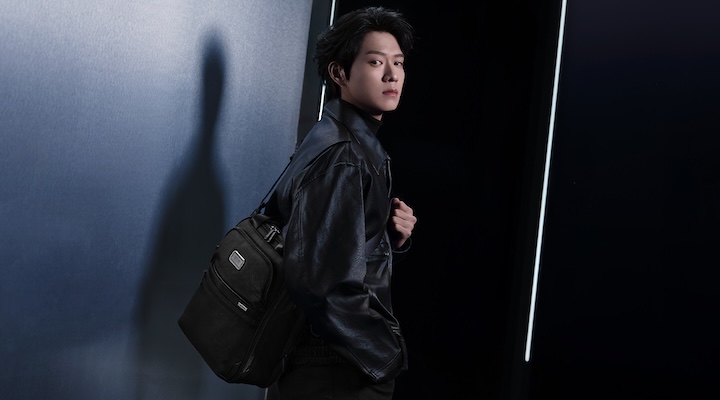
In Asia-Pacific, the campaign’s face is actor Wei Daxun, presented in sleek, modern urban environments. According to Maroulis, the pairing is intentional.
“Through the two campaigns, we want to communicate one clear idea: Tumi is built for modern movement for people who move with purpose and expect their essentials to perform with them across every scenario,” the executive said.
The Asia-Pacific consumer: Always in transition
Maroulis said customers across Asia-Pacific are living “increasingly complex and demanding lives,” with work and personal boundaries blurring.
But the way that need expresses itself varies by market.
In Hong Kong, frequent travel and cross-border movement mean that reliability and understated craftsmanship carry weight. Physical retail – especially in luxury malls and airports – remains central to the buying journey. The shopper often wants to feel the material, test the zippers, and assess the compartments before committing.
“We’re seeing strong signs of Hong Kong’s resurgence, with both travel demand and consumer confidence improving,” said Maroulis.
“Inbound tourism is a key driver, with December visitor arrivals reaching around 4.65 million, up over 9 per cent year-on-year, according to the Hong Kong Tourism Board. This is translating into higher spending, as retail sales in December 2025 rose 6.6 per cent in value, with online sales surging nearly 31 per cent year-on-year.”
For a brand rooted in travel, this translates directly into opportunity. Tumi’s network across IFC Mall, Harbour City and Hong Kong International Airport positions it in high-intent retail environments. The customer walking through those spaces is often already mid-journey.
The executive added that Singapore is more digitally led, with stronger influence from social platforms and e-commerce, and an appreciation for innovation and sustainable materials. Discovery can start online and end online.
Meanwhile, Mainland China demands the most sophisticated choreography.
China is Tumi’s second-largest market worldwide, with 86 stores. In this market, the company is building what it describes as a fully integrated omnichannel ecosystem – combining livestreaming, remote selling, and digital engagement with experiential retail and in-store personalisation, such as monogramming.
Consumers in Mainland China are “incredibly digitally savvy”, Maroulis said, and expect online discovery to connect seamlessly with the offline experience.
Flagship stores play a central role. Following the opening of its Shanghai flagship last summer, Tumi plans further flagship investments in tier-one cities and beyond.
The bigger ambition
Since 1975, Tumo has positioned itself as a lifelong partner to “movers and makers”. This year, that ambition feels newly relevant in the Asia Pacific.
The region’s professionals are travelling again. Cross-border business is active. Digital ecosystems are mature. Expectations are high.
The Alpha relaunch suggests that the company believes the next chapter of luxury in Asia will not be defined by extravagance alone, but by products that integrate into demanding lives without adding noise.
Or, as Norris put it, “You want everything to work exactly as it should.”
Further reading: Aris Maroulis on why China is central to Tumi’s next growth chapter.