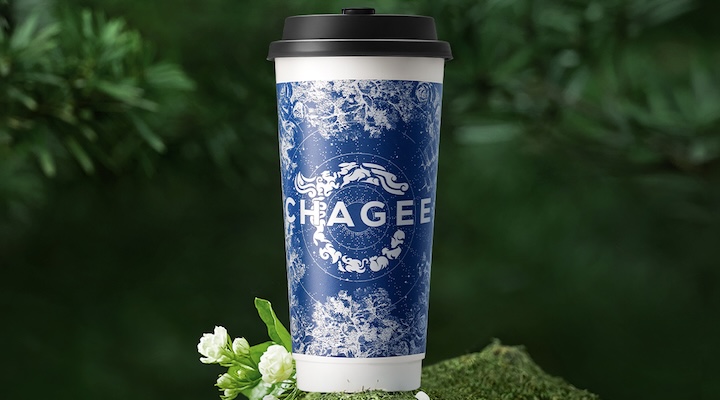
Chinese tea giant Chagee has reported a 9.4 per cent year-on-year decline in net revenue to RMB3.21 billion (US$450.7 million) for the third quarter of this year, while net income reached RMB397.9 million. Same-store gross merchandise value (GMV) fell 27.8 per cent, and third-quarter operating income came in at RMB454.4 million. Facing market reality Its loyal 222 million-member ecosystem has supported Chagee’s model. However, the market uncertainty has pressured even the str
n the strongest operators.
In its home market, which is still home to more than 6800 stores, average monthly GMV per store fell to RMB378,506, continuing a steady decline from RMB527,956 in the third quarter. Consumers’ shift toward discounts on food-delivery apps has pulled volume away from dine-in formats, compressing the segment’s traditional moat around experience-led retail.
Chagee’s management acknowledges this. Hongfei Huang, chief financial officer of Chagee, pointed to “the impact of the delivery platform subsidy competition” as a major drag on sales. Despite that, the company reiterated that it will not pursue traffic at the expense of product integrity or brand equity. Instead, it is holding its premium position even as peers temporarily lean into discounts.
Quality-focused
CEO Junjie Zhang used much of the earnings call to articulate Chagee’s long-term ideological anchor: a “high-quality development strategy” built on brand, product, experience and channels.
“We’re dedicated to delivering high-quality products rather than chasing traffic and trends,” Zhang said. “We prioritise our product excellence. Our ongoing raw material upgrades ensure tea that is authentic, wholesome, warm and culturally rich, serving as the cornerstone of every experience and a key trust pillar for our brand.”
On the brand side, Chagee is accelerating work on what it calls Teahealth, its next-generation brand experience. It is also expanding cultural-themed teahouses and high-profile flagship locations, such as its Hong Kong teahouse and its showcase store at the Rolex Shanghai Masters.
The company is also rolling out a 4.0 product system, elevating raw material sourcing standards and expanding its cross-category innovation pipeline. Meanwhile, it is aggressively investing in its membership ecosystem. The company added 15 million new members in the quarter, pushing its number to 222 million.
Even with domestic headwinds, Chagee expanded its network by 300 stores during the quarter. The company argues that the long-term demand for premium tea beverages remains intact, and that consistently high-quality store openings will strengthen the brand’s positioning when the macro environment stabilises.
Southeast Asia as a new growth engine
Southeast Asia delivered a 75.3 per cent year-over-year increase in GMV to RMB300.3 million.
Store count reached 262 by the end of September, with expansions across Malaysia, Indonesia, Thailand, Singapore, and newly launched markets, including the Philippines and Vietnam. The company added 54 net new overseas stores in the third quarter alone.
Localisation has been crucial. According to the company, in Malaysia, a collaboration with Pop Mart drove unusually high engagement, with the Green Grape series accounting for half of all cups sold on the first day. In Singapore, the same promotion pushed average daily sales for featured products above 500 cups. In Indonesia, Peach Oolong Milk Tea captured over 30 per cent of cups sold within 15 days of launch, while in Thailand it reached roughly 16 per cent in the same period.
Although overseas same-store sales also declined, falling 23.4 per cent year-over-year, the company emphasised that this reflected high base effects and heightened promotional intensity across the category, not a structural weakness in demand.
“So these successful localisation efforts, combined with our steady store expansion pace, give us strong confidence in overseas growth in Southeast Asia,” Huang said during the company earnings call.
“So moving forward, we will continue to deepen our presence in those markets we’ve entered. Steadily expand into new markets and keep improved per store profitability and the brand impact.”
Chagee’s rapid push into global markets is not inexpensive. Company-owned store operating costs nearly doubled year-over-year to RMB271.4 million, driven by increases in payroll expenses, rent, utilities and support infrastructure required for managing multi-country operations. The company noted that operating costs per company-owned store declined quarter-over-quarter, suggesting early signs of operational learning and economies of scale.
The company declined to issue formal guidance, citing ongoing market uncertainty.
Further reading: Can Chagee sustain growth while resisting China’s price wars?