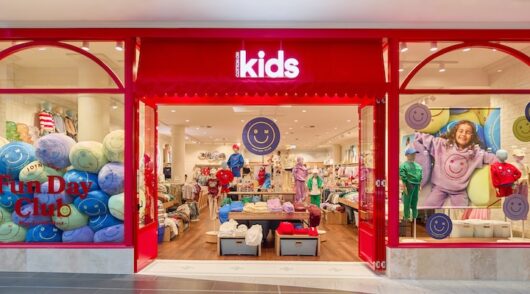
US fashion retailer Gap is preparing a renewed push into China, with plans to open roughly 50 stores across Greater China this year through its local partner Baozun, aiming to lock in double-digit revenue growth and reassert relevance in a market where many Western peers have stumbled. Ken Huang, president of brand management at Baozun, laid out the strategy during the company’s recent earnings call. “We are accelerating our store opening efforts to build on this momentum,̶
,” Huang said, projecting sustained strength into this year and beyond.
The tier-2 and tier-3 goldmine
Beyond Beijing and Shanghai, China’s next phase of consumption is now being shaped in lower-tier cities, where rising incomes and urbanisation are creating a new generation of apparel consumers.
According to McKinsey’s report ‘The New Faces of the Chinese Consumer 2025’, tier-2 and lower cities drove more than 60 per cent of new apparel spending growth last year, powered by urbanisation and rising middle-class households.
Olivia Plotnick, founder of Wai Social, describes the expansion as “ambitious” but argues the real story lies in execution.
“By partnering with Baozun, they’ve handed the keys to a local operator with capital, relationships, and the retail intelligence to get into the right locations,” Plotnick told Inside Retail.
Navigating the positioning minefield
Yet even with a stronger local partner, Gap faces a more fundamental challenge: Its position in China’s rapidly evolving fashion hierarchy.
Over the past few years, China’s domestic apparel brands have evolved rapidly, combining competitive pricing with improved design and highly effective digital marketing. Many operate on faster production cycles and are more responsive to local tastes.
That leaves brands like Gap in what analysts describe as a “squeezed middle”: Too expensive to compete with value-driven domestic brands, yet not sufficiently differentiated to command a clear premium.
“One of Gap’s biggest challenges will be positioning,” Plotnick said. “These same consumers are increasingly exposed to high-quality Chinese brands that can out-compete on price, product, and marketing.
“What ‘premium’ means in a tier 3 city today looks very different from what it did five years ago. Gap will need a compelling, clear value proposition if it wants to earn that spend.”
Lessons from a decade of exits
Gap’s renewed push comes amid a long list of foreign retail casualties in China.
Fast-fashion casualties in China include Old Navy, Topshop, Bershka, Pull & Bear, Stradivarius, Oysho, Forever 21, and Esprit. Earlier exits like Gap’s Old Navy (2020) and Superdry cite similar woes: cultural missteps, slow supply chains and channel blindness.
Guess offers a more recent example. After entering China in 2007, the brand shuttered its physical and online stores, opting to reset its strategy and re-enter under a different model.
“Yes, some foreign brands are exiting China but largely because they failed to find the right partners or the right positioning,” she said.
Baozun, which took over Gap’s China operations in late 2022, ended 2025 with 164 Gap stores, up from 135 at the end of 2022, including 29 added last year. Sales surged more than 20 per cent last year, with executives eyeing 30 per cent annual growth over the next two years.
The company, which also manages the Hunter brand in China, added five Hunter stores in the final quarter of last year, targeting high-potential tier-2 cities such as Nanjing in Jiangsu province and Qingdao in Shandong. Across its portfolio, Baozun closed the year with 177 stores, a network designed to streamline supply chains and fuel long-term expansion.
“What you’re seeing with Gap and these other bands like Starbucks and Burger King, is a different story: brands that are doubling down and finding a new path to growth,” Plotnick said. “China isn’t over for foreign brands. It just looks different.”
Further reading: Guess exits China: What went wrong with its mid-market squeeze.