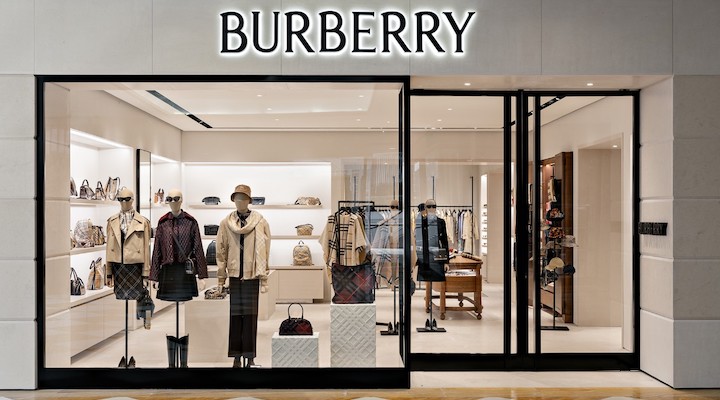
After several years of underperforming sales figures and decreased cultural relevance, Burberry’s recently appointed CEO Joshua Schulman announced a turnaround strategy, dubbed “Burberry Forward”, to bring the brand back on track in November 2024. Fast forward a year to November 13, when Burberry released its Q2 fiscal report, which revealed that for the first time in two years, the brand’s comparable retail figures returned to growth, spiking by two per cent. In the rep
he report, Schulman stated, “One year into Burberry Forward, my belief in this extraordinary British luxury house is stronger than ever. With the consistency of our timeless British luxury brand expression and an improved product offer, we have begun to see customers return to the brand they love.”
This doesn’t mean that the British luxury label is entirely out of the woods, as the report also revealed that Burberry’s revenue declined by three per cent year-over-year to hit £1.03 billion (about US$1.35 billion).
Acknowledging the brand’s further need for progress, Schulman added, “While it is still early days and there is more to do, we now have proof points that Burberry Forward is the right strategic path to restore brand relevance and value creation. We move forward with confidence that Burberry’s best chapters lie ahead.”
Experts reflect on Burberry’s Q2 results
Neil Saunders, Global Data’s managing director, remarked that Burberry’s latest results were a positive sign that the strategy to revitalise the brand is finally starting to work.
He pointed out that the luxury label’s numbers were helped by better sales in China, with three per cent growth in comparable retail sales this quarter, where a lot of luxury players have also witnessed uplifts.
After Burberry previously tried, and failed, to uplift its image to that of an “uber-luxury brand” by raising prices higher, which ultimately went against the alignment of the company’s heritage, Saunders noted that the brand is rightfully returning back to basics.
“It is playing more on its British heritage, is focusing on the accessible premium part of the market and is leaning into the products, like coats and scarves, that made it famous. All these things have helped the brand gain ground with consumers,” said Saunders.
Adding upon Saunders’ remarks, Naomi Omamuli Emiko, founder and owner of TNGE, a marketing agency and growth studio built to accelerate beauty and wellness brands, reflected that the brand’s growth comes from both tighter operational moves and a return to basics.
“Comparable retail sales turning positive for the first time in two years is a positive signal, but it’s quite striking to look at the data underneath: we see margins rising to 67.9 per cent, inventory down 24 per cent and full-price newness strong enough to offset weaker outlet traffic.”
Similar to Saunders, Emiko commended the brand’s tighter product architecture, including a more coherent ready-to-wear offer and a needed reset to handbag base prices, that helped rebuild Burberry’s desirability and the brand’s lifted Gen Z traction in China.
Ultimately, despite the brand’s mixed Q2 results, CI&T’s global director of retail strategy, Melissa Minkow, remarked that the brand is on a steady path back to a proper comeback.
“Their turnaround strategy has mainly focused on honouring what the customer wants. They have emphasised a renewed commitment to deeply understanding their target, returned to a more accessible price point and gone back to centring their assortment around outerwear.”
Where does Burberry go from here
As Emiko explained to Inside Retail, “Burberry’s decline was never about one bad season, but rather the result of accumulating strategic drift.”
“The brand had stretched too far beyond its core British luxury codes, lost clarity in its assortment and priced key categories beyond what customers felt the product actually justified. This past year has been the long-awaited reset built on discipline, not theatrics.”
“What we now need to see this recovery take root with stronger numbers in core markets and higher transaction values as shoppers push into more expensive items. Having a better play in accessories would also be useful,” Saunders added.
Minkow also noted that it would be beneficial to the brand for them to take up a proprietary resale channel, in addition to building out a luxury digital experience with a sort of personal shopper.
“There is so much brand love among consumers that they can leverage in extremely creative ways.”
But perhaps the most essential step to the company’s ultimate comeback is simply focusing on its own iconic brand essence..
“Not trying to look like other luxury houses is what resonates with the next generation. And in Burberry’s case, that confidence, alongside return on investment-driven marketing and a return to operating profit, finally brings back the brand’s momentum rooted in its own DNA. I wouldn’t call it full comeback mode just yet, but the trajectory is finally credible,” said Emiko.
So long as the brand continues on the path it has set for itself, in addition to continuing to focus on spicing things up here and there with new products and intriguing brand campaigns, we should see Burberry return to its retail height once more, the experts collectively concluded.
Further reading: Luxury experts weigh in on how Burberry can rebuild its premium brand identity