Two of the most interesting brand partnerships I’ve seen in a while dropped recently. The first, between Steve Madden and Melbourne Winery, involved the fashion brand launching a limited-release Pinot Gris and wrapping a bunch of content around it. It’s interesting because of the limited size of the two operations. Partnerships are most often the go-to of large brands of similar scale in either adjacent or different categories, that can afford to go large together, leverage share
shared equity, and generate massive reach and buzz.
Think McDonald’s and Squid Game, or Starbucks and Spotify.
Still, just because you’re not a behemoth doesn’t mean you can’t forge a brand partnership that is relevant, fun and mutually beneficial in myriad interesting ways.
While I know Steve Madden, I didn’t know Melbourne Winery, a new ‘urban winery’ with just one location. They both clearly entered this partnership with very different goals.
For Steve Madden, it was about extending the lifestyle appeal of the brand. To quote its Australian marketing boss Jamie Kouktzelas, “Consumers increasingly expect brands to be part of their lifestyle beyond the core product, and this wine release is a way of building that deeper relationship. It’s about creating experiences and touchpoints that reflect the brand’s identity while opening up new commercial pathways.”
A commonsense justification. And it’s strong for Steve Madden.
Meanwhile, for Melbourne Winery, there’s a brand awareness play.
While finding these opportunities and even identifying the target businesses to join hands with is the fun part, putting yourself in potential partners’ shoes is markedly more difficult. And that’s what you need to master if you’re going to make them believe the partnership will benefit them as much (or even more) than you.
Let’s start with the reasons you’d want your business to partner with another.
Double (or more) your reach.
Create deeper engagement with customers via an adjacent product.
Build credibility.
Be a good corporate citizen.
Get your numbers up by any means possible.
Drive awareness – exposing your name and offering to an untapped market.
I’d say Melbourne Winery was mostly in it for the last two, which leaves us with two different businesses, doing it for two different reasons. But it combines well and makes perfect sense.
That said, brand partnerships don’t have to make perfect sense. It’s arguably more buzzworthy the less sense it makes. Which brings us to the second partnership that caught my eye: Metallica and Australian Red Cross Lifeblood. Yes, that Metallica. This came out of left field.
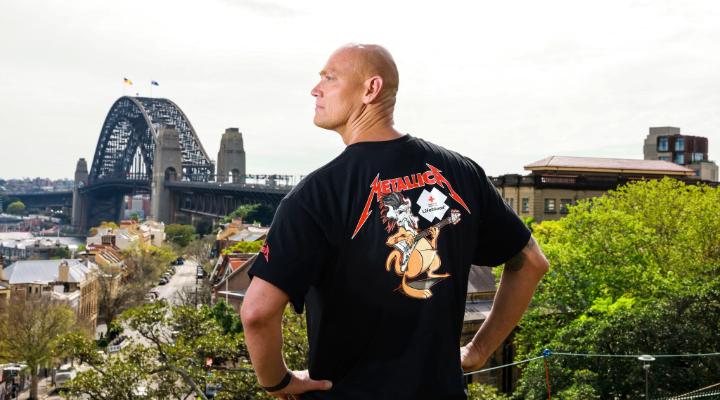
The partnership rewards people who donate blood a week before Metallica lands in their city for the band’s November tour. When you donate, you score a limited-edition band T-shirt.
Metallica is always looking to play the good citizen through the band’s ‘All Within My Hands’ foundation. I’m sure they field lots of requests to partner from all over the world. But given the upcoming tour, this helps with the hype.
The more interesting party in this one is Lifeblood, an organisation that is always looking for ways to get its numbers up. This is a clever play, too. A fresh look at the category, and it would bring in people who have either lapsed or not considered donating before.
It’s an unusual partnership for sure, but despite hugely different objectives, there appears to be no downside.
The point of all this is that clever brand partnerships are not common, but they can be a brilliant tool to augment any number of your operations or objectives.
Get creative. Make sure the partnership enables you and your partner brand to stay true to who you are. Work out your pitch and sell it well to make sure you’re both getting all you can out of it.
Dom Megna is the executive creative director at advertising agency Spinach.