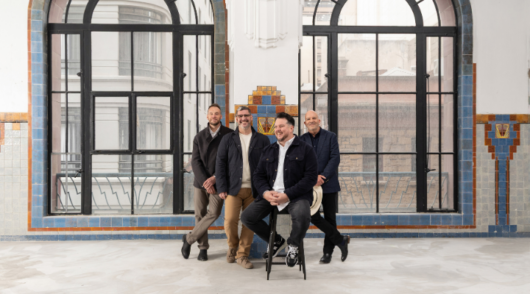
Back in the early 2000s, Declan Ee was a university student in London, living in a small rented flat, navigating council tax and learning the hard way how to assemble Ikea furniture on a tight student budget. He wandered down Tottenham Court Road, past the rows of furniture stores that lined the strip, admiring design pieces that were well out of reach. “I developed what I now realise was an expensive taste on a beans-on-toast budget,” he shared. “That memory stuck. And life ha
has a funny way of circling back.”
He never imagined that two decades later, he’d return to the UK market as the co-founder of Castlery, a fast-growing, Singapore-founded furniture brand now selling in more than 100 cities globally. Castlery recently made its UK debut, marking its first step into Europe and the latest in a string of international expansions that already includes Australia, the US and Canada.
“While it’s our first step into Europe, it feels much more personal for me,” he said.
British consumers can now browse Castlery’s signature pieces, including the Auburn sofa, Harper dining table and Sloane storage system, online with delivery promised in as little as a week.
According to Ee, behind the sleek interface is a coordinated ballet of more than 100 employees working across time zones to ensure logistics are seamless, inventory is available and customer experience feels ironically uncomplicated.
The approach is intentionally direct: digital-first, supported by operational readiness, with no bricks-and-mortar presence yet.
In the UK, the brand is betting on a similar appeal as it has in other markets: clean modern aesthetics, accessible pricing and fast transparent delivery. In other words, furniture for people who want good design, but don’t want to remortgage the house for a coffee table.
Omnichannel focus
This lean-in strategy reflects Castlery’s broader playbook: enter a market online, gauge traction and consumer behaviour, then invest deeper. It’s a method that has worked well in Australia and the US, where omnichannel has been a big part of tailoring the approach for different customer expectations in different countries.
“Furniture isn’t traditionally purchased online, and we are traditionally an online company, but a large portion of our customers still want to touch and feel the sofa before making that commitment,” Leah Howatson, vice president of marketing at Castlery, told Inside Retail. “And so we’re looking at how to reach these customers and meet their expectations so that they can see our products in real life before they buy.”
“If Castlery customers are willing to take time out of their days and travel down to your showroom, you really want to impress them with the experience and with the service that they can find there.”
The brand’s Sydney showroom, its first outside Singapore, serves as a template for the future. Designed not as a static display but as an interactive environment, the space allows visitors to visualise how products might work in their own homes.
“We’re also trying to show a diverse range of styles so you can walk through the store and see something that speaks to you. And we understand that people want to adapt different styles to their home and we want to speak to that,” she said, adding that customer interaction also plays an important role in enhancing overall brand experience.
Castlery creates an experience built for the modern customer: digitally fluent but still emotionally connected to their living spaces.
Online wishlists sync with in-store consultations. Sales associates can pull up customer profiles and suggest tailored setups.
“In every store, we have trained and skilled interior designers that can create mood boards for you. They can solve problems with space. So if you have an awkward space that you’re trying to furnish, we can take that 3D floor plan, add in our furniture to validate that it will fit because that’s often a pain point,” said Howatson.
“And that’s something that we offer as an added service to really create a memorable customer experience and make it really appealing for customers to come into our store and have that brand experience in-store.”
Even logistical friction is smoothed out through partner integrations and real-time visibility.
“We provide a lot of visibility and tracking because we know customers want to know where their products are in the supply chain. And we also offer flexibility on delivery. So we work with our delivery partners to enable customers to choose different dates or time slots that work for them so people can take time off work, or they can ensure that the old products have been removed from the home so there’s space to unload. All of this we’re really focused on improving and listening to customer feedback wherever it happens, to then work on it and build an experience that’s memorable,” she said.
While the UK launch doesn’t include a showroom yet, the backend infrastructure for this kind of connected commerce is already in place. And if initial traction goes as planned, Castlery may not rule out a physical presence in London or other key cities in the coming year.
Further reading: From staging musicals to running a global furniture brand: Castlery’s Declan Ee.