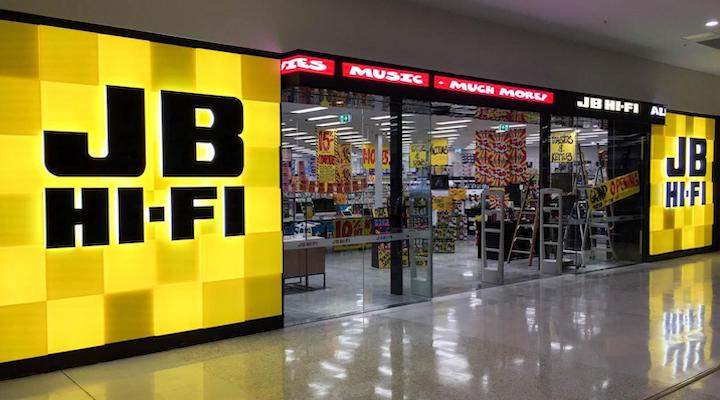
JB Hi-Fi’s sudden July slump has prompted an uncomfortable question for Australian retail. Did Australia’s May federal Budget frighten shoppers into closing their wallets? On Monday, the quintessential home entertainment retailer disclosed its FY26 results, comprising record group sales of $11.06 billion and net profit of $489.9 million. But July told a completely different story. During that month, sales at JB Hi-Fi’s 209 Australian stores and online business dropped 0.5 per cen
cent, The Good Guys fell 1.7 per cent, and E&S fell 2.7 per cent. Across the Tasman, however, the picture was more favourable, with JB Hi-Fi New Zealand sales rising 20.9 per cent, making its weak spot seem distinctly Australian.
The timing is fraught for Nick Wells, who became group chief executive last October. His first full-year result in the top job was otherwise impressive, which makes July’s sudden drop all the more noticeable. “We are pleased to report record sales and solid earnings for FY26,” Wells said during the results presentation this morning. “In an uncertain retail environment where customers are seeking value, our brands continued to resonate, and our teams continued to execute to a high standard.” UBS analyst Shaun Cousins noted during the call that, outside the Covid period, July appeared to mark JB Hi-Fi Australia and The Good Guys’ first negative comparable-sales period since 2014.
Was Australia’s Federal Budget a culprit?
The Australian Federal Budget remains an irresistible culprit for July’s slight downturn, particularly after The Australian characterised it as unpopular and linked JB Hi-Fi’s July deterioration to weaker trading among housing-exposed retailers such as Nick Scali. Wells avoided blaming Canberra outright, but in the results Q&A, he conceded the overall environment had deteriorated. When asked how much July’s negative comparable sales reflected cost-of-living pressure, higher interest rates and falling house prices after the Budget, Wells replied that it was due to a multitude of factors. “Yes, from a macro perspective, it has got a little bit harder,” he conceded. He then pointed to July being a smaller, non-promotional month and said major sales periods were becoming far more important as customers hunted for value.
However, an anomaly is the idea that Australians simply recoiled from Australian Treasurer Jim Chalmers’ Budget, which paired new worker tax relief with contentious property reforms, including limiting negative gearing largely to new builds and changing the capital gains tax treatment from July next year. ANZ-Roy Morgan consumer confidence actually improved after the May announcement, rising from 64.1 points beforehand to 66.4 the following week and 70.8 by early June. Economist Stephen Koukoulas argued that this hardly resembles a wholesale consumer revolt, although plenty of other forces were at work.
The Budget may still have contributed to weaker housing sentiment, especially for retailers exposed to appliances, kitchens and home improvement, but Wells’ own explanation is focused on a tougher macro backdrop and, in his words, July was “a bit of a combination of everything”, pointing to another modern complication – AI. The global scramble for computing power is putting extraordinary demand on semiconductor production and consumer electronics are beginning to feel the consequences. Wells noted some wholesale prices had risen 50 per cent.
Covid-19 days
To understand why July is so interesting, it helps to remember the last time Australian shopping behaviour changed this dramatically. Few Australian consumers need reminding that JB Hi-Fi has some experience with extraordinary consumer behaviour, including during Covid-19, when demand for entertainment and home appliances rose as households worked, studied and spent more time at home. Online ordering and click-and-collect became more important than ever, allowing stores affected by lockdown restrictions to continue serving customers and cementing habits that endured after restrictions eased. This contrasts sharply with this year’s July result: during the pandemic, necessity pulled spending forward, but today Wells describes consumers prepared to defer, congregating around promotional events and waiting for value before committing.
July offers an indicative snapshot of the Australian shopper. The JB Hi-Fi Group still broke record sales this financial year, proving the group remains financially formidable. The unanswered question is what has made Australians more circumspect? The Budget and weaker housing sentiment may help explain it, but Wells also points to supplier price rises, stock availability and the growing pull of major sales events. After years of teaching shoppers to expect a deal, JB Hi-Fi may now be facing the consequence that customers are perfectly happy to wait for one.