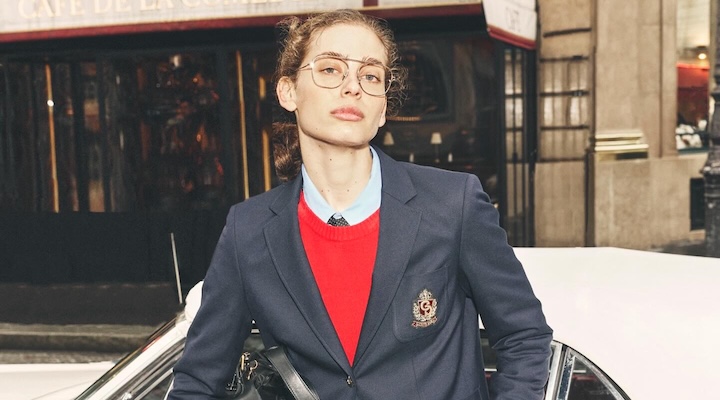
Parisian ready-to-wear label Gérard Darel has recently expanded in China, opening stores in Shanghai and Hangzhou with more cities in its sights. The brand’s co-CEOs, David Maruani and Laurent Gerbi, travelled to China themselves to make the case in person. Founded in 1971 by Danièle and Gérard Darel, the brand sold out to private equity firm Advent International in 2008, only to fall into receivership. The founding Gerbi family bought the struggling company back in 2015 and set about resto
storing it to health. The company has been refining the brand identity, upgrading store design with a new interior concept by architect Jules Mesny-Deschamps, and investing in the leather goods category, particularly the 24H bag, which has become a signature style among younger women in France.
In this interview with Inside Retail, they discuss what they found, how the brand intends to position itself in a competitive premium landscape, and why physical retail remains central to their approach.
Inside Retail: You’ve personally come to China for this launch and visited multiple cities. What has stood out to you on the ground about Chinese consumers and retail today?
David Maruani and Laurent Gerbi: What strikes us most is the level of sophistication and speed. Chinese consumers are extremely informed, very engaged, and very open to discovering new brands, but they expect authenticity and consistency. There is also a strong emotional dimension to shopping: people are not just buying products, they are buying into a lifestyle and a story. From a retail perspective, the integration between digital and physical is far more advanced than in many other markets. Stores are not just transactional spaces – they are experiential platforms. This raises the bar for any brand entering China.
IR: Why was now the right moment for Gérard Darel to make a more committed push into Mainland China?
DMLG: We felt that the brand had reached the right level of maturity and clarity to express itself internationally in a more ambitious way. Gérard Darel has a strong Parisian identity that is effortless and feminine. We believe this resonates particularly well with today’s Chinese consumer, who is increasingly looking for understated elegance rather than overt logos. At the same time, the Chinese market is evolving. There is more space for brands with heritage and authenticity, and this creates a meaningful opportunity for us to build something long-term rather than opportunistic.
IR: You launched first in Shanghai and Hangzhou. What did these cities represent strategically, and how do they shape your broader China roadmap?
DMLG: Shanghai is a natural starting point. It is one of the most international and fashion-forward cities in China, which allows us to introduce the brand in a highly visible and influential environment. Hangzhou, on the other hand, represents a different but equally important dimension: a strong, sophisticated local consumer base with high purchasing power and a deep appreciation for quality and lifestyle. Together, these two cities give us a balanced foundation, one that combines visibility, influence, and strong local engagement, which is essential for building a sustainable presence in China.
IR: You’re actively touring other cities. What are you looking for when deciding where to expand next?
DMLG: We are looking beyond size alone. Of course, economic strength and retail infrastructure are important, but we are equally focused on the cultural fit with the brand. Multiple cities have a growing appreciation for premium, design-led fashion, with consumers receptive to a more subtle, Parisian aesthetic. We also pay close attention to the quality of retail environments, as execution on the ground is critical. Ultimately, our approach is selective. We prefer to grow in a controlled and consistent way rather than expand too quickly.
IR: Many brands are leaning heavily into e-commerce in China, yet you’re emphasising physical boutiques. What role does retail play in building the brand here?
DMLG: Physical retail is essential for us because Gérard Darel is a brand that is built on emotion, texture, and silhouette. The experience of the product, the fabrics, the fit and the movement cannot be fully conveyed online and needs to be experienced. Our boutiques are also where the brand universe comes to life. They allow us to express our Parisian identity in tangible ways and build a direct relationship with our clients. Of course, digital is important and will play a complementary role, but we see physical retail as the foundation for building brand awareness and trust in China.
IR: Are you adapting your product or storytelling for China, or is the strategy to introduce the brand exactly as it exists in Paris?
DMLG: Our starting point is always authenticity. We are bringing Gérard Darel as it exists in Paris, its style, values and heritage. That is what makes the brand unique. That said, we are attentive to local sensibilities. This can be reflected in merchandising, communication, or the way we engage with clients. It is more about adaptation in expression rather than changing the essence of the brand. We believe Chinese consumers appreciate brands that are true to themselves, while still being respectful and aware of the local context.
IR: China’s premium womenswear market is highly competitive. Where do you see Gérard Darel’s unique space?
DMLG: We position Gérard Darel in a space that is both premium and accessible, with a strong emphasis on timeless style rather than seasonal trends. Our difference lies in a very specific kind of Parisian elegance, effortless, confident, and not over-designed. It is about creating a wardrobe that women can live in, rather than statement pieces that are worn once. In a market that often focuses on logos or fast-changing trends, we believe there is a growing audience for this kind of enduring, understated luxury.
IR: Looking ahead, what role do you hope China will play in Gérard Darel’s global story?
DMLG: China is a strategic market for us, not only in terms of scale but also in terms of influence. What happens in China often shapes broader global trends, particularly in retail and consumer engagement. We see China as a key pillar of our international development over the coming years. Our ambition is to build a strong, coherent presence that contributes meaningfully to the brand’s global growth, while also enriching how we think about our customers worldwide.
IR: Has anything you’ve seen in China changed how you think about the future of retail?
DMLG: Absolutely. China shows what the future of retail can look like when digital and physical are fully integrated and when the customer is truly at the centre of every decision. It has reinforced our belief that retail is no longer just about distribution. It is about experience, service, and storytelling. It has also highlighted the importance of agility: the ability to listen, adapt, and evolve quickly. These are lessons that we will take with us and apply not only in China, but across all our markets.
Further reading: Inside Rue Madame’s measured expansion in China’s more selective consumer era.