For tourists landing in Tokyo and Osaka, the itinerary has acquired a new fixture – a stop at an Onitsuka Tiger store for a pair of Mexico 66 sneakers, the slim, side-striped silhouette made famous by Uma Thurman in Kill Bill. The ritual has become so entrenched that Asics credited inbound visitors as the main driver of a 22 per cent jump in its Japan sales in the first quarter of this year. Now the brand they queue for is getting a company of its own. Earlier this week, the Asics
Asics board approved an absorption-type company split that will transfer the Onitsuka Tiger business to OT Group Corporation, a wholly owned subsidiary established in February and headquartered in Tokyo’s Kita-Aoyama.
The split agreement is scheduled for execution on October 1, with the reorganisation taking effect on January 1, 2027.
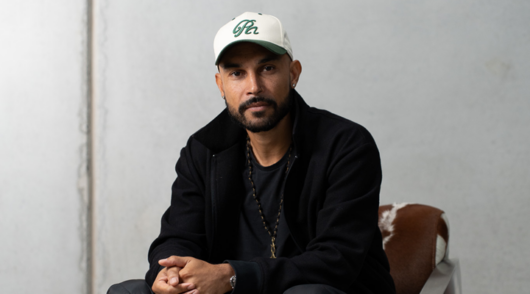
Onitsuka Tiger operations, currently sitting within Asics’ regional subsidiaries, will also be carved out and consolidated under the new entity, which will function as a global headquarters overseeing roughly 190 directly operated stores, some 2800 employees and distribution across about 160 countries. Ryoji Shoda, the brand’s current head, becomes OT Group’s president and chief executive.
Side business to growth engine
Onitsuka Tiger’s sales jumped 43 per cent to 136.5 billion yen (US$851 million) in the year ended December 2025, lifted by European demand, inbound tourism to Japan and a weaker yen, according to Reuters.
The momentum has not slowed: first-quarter net sales for fiscal 2026 rose 33.8 per cent to 37.8 billion yen, while category profit climbed 45.3 per cent to just under 15 billion yen, pushing the profit margin to 39.6 per cent.
Investors have noticed. Asics shares have gained roughly 20 per cent this year and about sevenfold over five years, giving the group a market value near US$20 billion, per The Japan Times.
The business, which is now formally split, reported non-consolidated net sales of just 6.66 billion yen, as that figure captures only the royalties the parent collects from regional operating companies. The brand’s full 136.5-billion-yen commercial engine sits in those regional units, which will be reorganised under OT Group in a second phase. Asics says the transaction will have minimal impact on consolidated results.
The sneaker tourists travel for
So what exactly are the shoppers buying? Partly, a design with nearly six decades of accumulated meaning.
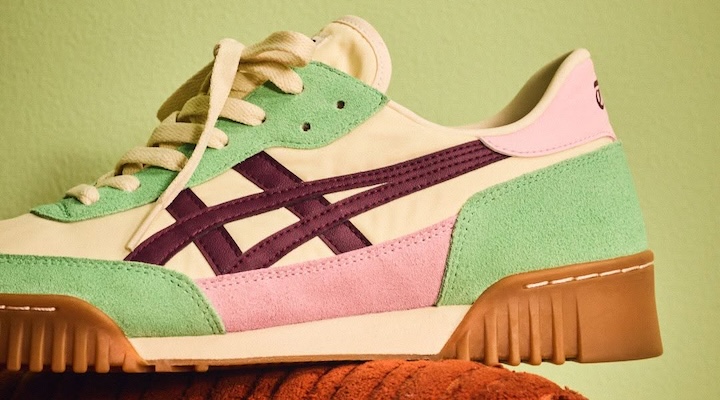
The Mexico 66 debuted in 1966 ahead of the Mexico City Olympics. It was the first Onitsuka Tiger shoe to carry the crossed tiger stripes – a slim, flat, unmistakably retro silhouette that predates almost everything on its competitors’ lifestyle shelves.
Cinema did the rest: Bruce Lee wore a similar yellow-and-black pair in Game of Death in 1978, and when Tarantino dressed Thurman’s Bride in the same palette as an homage, the colourway became known simply as the Kill Bill sneaker. That kind of provenance cannot be engineered on a marketing calendar, and it has landed squarely in the middle of fashion’s biggest footwear shift. WWD traces the current resurgence to 2022, when the Mexico 66 emerged as an alternative to the Adidas Samba, just as flat, low-profile sneakers displaced chunky soles as the dominant trend, helped along by sightings on Bella and Gigi Hadid and Kaia Gerber.
“Onitsuka Tiger’s secret weapon is nostalgia, design minimalism, and a cult movie moment that never fully went away. Bruce Lee wore them. Uma Thurman wore them in Kill Bill,” said Sonja Elcic, founder of Citrine Research and Consulting.
“The brand was patient enough to let that iconic pop culture residue keep simmering, then smart enough to relaunch with targeted collabs, drop limited-edition colourways, and lean hard into Japanese craftsmanship vibes.”
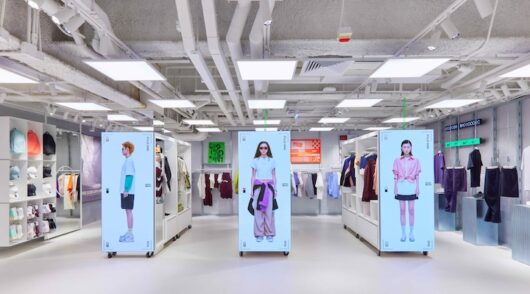
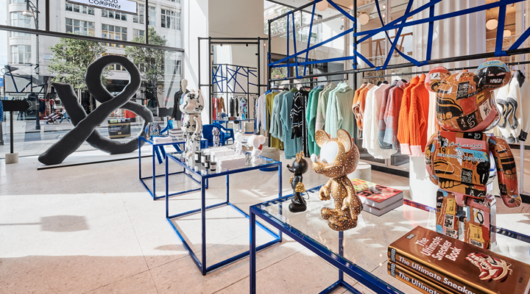
The second part of the answer is how the brand sells. Onitsuka Tiger sits in an unusual pocket of the market: priced within reach of a mainstream sneaker buyer, but merchandised with the theatre of a luxury house – craftsman-made Nippon Made editions, in-store cafes at its Ginza and Shanghai locations, a fragrance line launched in November 2025, and ambassadors such as Momo of the K-pop group Twice. The same outlet captured the pilgrimage dynamic at the Tokyo flagships, quoting a Canadian shopper: “Everyone says you have to buy Onitsuka Tiger shoes when you come to Japan.”
While the weak yen and tax-free shopping sharpen the incentive, the brand has made the physical store, not the product alone, the thing tourists travel for. That is precisely why directly operated stores anchor their growth model, and why the experience is difficult for online resellers or rivals to replicate.
Onitsuka Tiger has spent the past three years repositioning itself as a luxury lifestyle label with a flagship on the Champs-Élysées, a runway slot at Milan Fashion Week and a collaboration with Versace.
Shoda said the brand will open its largest flagship yet in Tokyo’s Shinjuku district on July 10, followed by Nagoya in August, with Milan, Seoul and Los Angeles to come over the next year, according to Reuters. The Los Angeles opening would mark Onitsuka Tiger’s return to the American market, which it abandoned in late 2023. However, this time on its own terms, under its own roof.
Further reading: How Onitsuka Tiger has become Asics’ secret weapon.