The 2026 FIFA World Cup will be the largest and longest tournament in the competition’s history, with 48 teams competing across three host nations, the US, Mexico and Canada. With an estimated six billion people set to watch, retailers would be remiss not to participate in the excitement, and few brands are letting the opportunity pass them by. However, with so many competitors vying for consumers’ attention, brands can’t simply slap a soccer team logo on a product and expect it to sell ou
out.
“Any activation that connects a brand with a sport needs to have some semblance of logic and fit,” Dr Cristel Russell, professor of marketing at Pepperdine Graziadio Business School, told Inside Retail. “There are multiple fit dimensions, but they must make intuitive sense.”
For example, Nike, as a sports brand, is an immediate and logical fit for the World Cup. Whereas brands with less obvious connections to the World Cup will make consumers consider the congruence, or lack thereof, between the essence of the sporting event and the brand’s own essence or positioning.
“Emotional resonance is about tapping into the emotions triggered by the event and authentically capitalising on them,” said Russell. “For instance, the World Cup is about teamwork and global unity, so these themes have to complement the positioning of sponsoring brands. Resonance happens with the right mix of relevance, i.e., tapping into what matters to the audience, and congruency, which is how the connection between the brands is presented.”
Concurring with Russell’s assessment, brand strategist and marketing consultant Bethany Paris Ramsay said, “The winners will be those that can create the most authentic connection between their brand purpose and the cultural moment of the World Cup.”
Nike, Ramsay noted, is an obvious example of a brand that will win over customers during the tournament. She explained it is because the brand has long understood that sports are about more than athletic performance and consistently succeeds because it doesn’t market to fans. Its success stems from its ability to market to people who see themselves reflected in the athletes, stories, and values surrounding the game.
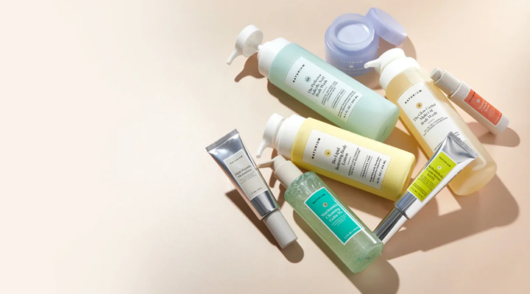
Outside of traditional sports brands, Ramsay said she is intrigued to see how the American skincare brand Paula’s Choice, which was recently announced as the official skincare sponsor of the 2026 FIFA World Cup, will fare.
“As a brand strategist based in Seattle, the city isn’t often recognised as a beauty industry hub despite being home to one of the category’s most influential brands,” said Ramsay. “With Seattle serving as one of the host cities for the World Cup this year, it’s exciting to see a local beauty brand play such a prominent role on a global stage.”
“As the official skincare sponsor, Paula’s Choice has a clear right to participate in the conversation. More importantly, it’s doing so with a thoughtful strategic framework. Through its ‘Proud Supporter of Your Skin’ campaign, the brand is positioning skincare as part of a performance mindset, connecting efficacy, preparation and confidence in a way that feels relevant to athletes and everyday consumers alike.”
Ramsay also pointed out that the brand is balancing the sponsorship with its 31st anniversary celebration and its fan club activation, which will allow consumers to win tickets to the World Cup final.
“This is a smart example of using a global cultural event to deepen customer engagement rather than simply borrowing attention from it,” said Ramsay. “The brands that stand out during moments like the World Cup are often the ones that turn spectators into participants, and Paula’s Choice is creating opportunities for consumers to feel connected to the event rather than simply being marketed to.
“Ultimately, I think consumers are becoming increasingly sophisticated when it comes to event marketing. They can tell when a brand is simply showing up because it’s a major cultural moment. The brands that will break through are the ones that can clearly answer the question: Why does this brand belong here?
“Whether through performance, purpose, community or storytelling, the strongest World Cup campaigns will feel like a natural extension of the brand rather than a temporary sponsorship opportunity.”
Regardless of which brands choose to participate in World Cup activations, Melissa Minkow, CI&T’s global director of retail strategy, said that it is important they do so through products or events that are clever, relevant and enjoyable and, arguably, delivered quickly.
“The key will be speed in production, so the retailers who are ready to rush out new products will be the winners,” said Minkow. “There’s a ton of opportunity here to break through thanks to social media and consumers’ affection for trying timely drops.”
How retailers can bank on the FIFA World Cup energy with attention versus product
Retail strategist Christine Russo, principal of the Retail Creative and Consulting Agency, noted that retailers do not need to focus solely on themed products or in-person engagements to capitalise on the attention generated by this major sporting event.
“Sports are recognised as the most unscripted drama, filled with must-watch moments that contribute to peak audience availability,” said Russo.
If brands are responding to ongoing developments – including wins, losses and memorable moments – in real time, along with the soccer fans themselves, there is an opportunity to connect with consumers on an authentic level.
“The adtech industry has evolved, offering numerous ways to reach customers, and that is not just linear. There is streaming, social, creator content, out-of-home in host cities, retail activation, branded merchandise, IRL fan zones, watch parties and in-stadium activations. Because of adtech, brands can now reach the right fan, in the right language, on the right platform, in real time.
“Naturally, we can expect a lot from FIFA’s official partners, including Adidas, Coca-Cola, Visa, Hyundai-Kia, Lenovo and Qatar Airways, as well as the World Cup sponsors like McDonald’s, Verizon, Michelob Ultra, Hisense, Lay’s and Bank of America.
“For other players who cannot use the FIFA logo, the opportunities are endless and could reward those rolling out five reactive TikToks during a single match, while the official sponsors sit on bloated ads that are not in real time.
“Over the course of the World Cup, we may see that speed beats budget. A brand that posts a reactive, culturally fluent TikTok during a match can outperform a $70 million sponsorship that’s preprogrammed for a particular day and time, regardless of match outcomes.”
Further reading: Adidas riding on a global wave of popularity for football