“Getting teenagers off their phones, getting off Netflix. They’re all competing for time.” QBD Books chief executive Nick Croydon’s observation captures the crowded economy modern bookselling now occupies. Yet rather than rage against these trends, publishers are leaning into them. Today, books move through a wider cultural economy spanning livestreamed author sessions, manga conventions, online fandoms and the algorithmic churn of TikTok’s trending subcommunity, #BookTok. At Bri
Brisbane Writers Festival last year, QBD sold around 350 copies of Ben Crowe’s book, in front of the audience at a single appearance. Readers queued for signed editions after first encountering authors online, through social feeds, podcasts, livestreams and fan communities that now exert enormous influence over purchasing behaviour.
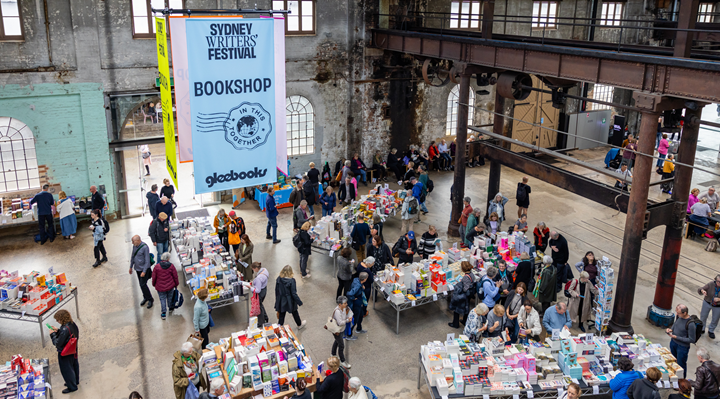
As Sydney Writers’ Festival unfolds this week, bookselling is in the middle of adopting the qualities of fandom and interactive retail, as retailers and reading platforms build connections through festivals, livestreams, collector culture and discovery. More than 50 million BookTok-recommended books were sold across Europe in 2025, generating $1.3 million in revenue. Physical stores, libraries and apps are also becoming interconnected within the same discovery system. For Australian retailers, this has created a commercially valuable convergence between literary culture and experiential consumer behaviour.
The manga cult-evolution
Manga and fantasy publishing probably illustrate this evolution most clearly. Supanova Comic Con & Gaming attracts more than 135,000 attendees nationally each year, and has become a valuable retail environment for booksellers targeting fandom-driven audiences. Natasha Ritz, GM of digital transformation at QBD Books, said the retailer has observed enormous demand across these categories. “We sell thousands and thousands and thousands of copies of manga books,” she told Inside Retail. “We were at Supernova on the Gold Coast and in Melbourne over the last two weekends, and they were the biggest events we’ve ever had in those areas.” Croydon recently told The Australian that curation and staff knowledge remain critical within these highly engaged genres. “That’s why we have to have a well-curated range. And people who know what they’re talking about,” he said.
Writers’ festivals, rather than functioning solely as literary gatherings, now generate concentrated purchasing activity around author appearances, signings and event-specific sale pop-ups. Ritz explained that retailers are frequently brought into festivals once the audience scale and demand reach sufficient volume. “The way that book retailers normally get involved with writers’ festivals is really often through side events or once the author has spoken, we will be the retailer that sells the author’s book on their behalf,” she said. Signed editions continue to perform strongly. “Whenever you’ve got that ‘signed by the author’ sticker, we do find those copies obviously sell faster than any other regular copy.”
Live & Local
Digital reading platforms are reinforcing this environment through sophisticated forms of discoverability. Sydney Writers’ Festival’s Live & Local program, supported by library book borrowing app, Libby, streams sessions into libraries and community centres throughout regional Australia. The Festival now stages more than 300 events annually and attracts more than 90,000 attendees each year. Julianne Tobin, Libby’s account manager, said contemporary reading discovery now unfolds across numerous interconnected channels. “The traditional ways of discovering books and authors in literary pages of newspapers, on radio programmes or by word of mouth still exist,” she said. “But now there are so many more ways for people to engage: BookTok, Instagram, book clubs on Facebook, livestreaming of festival events, even streaming of films based on books, encouraging watchers to seek out the original source.”
The acceleration of digital discovery is also extending the commercial lifespan of books themselves. Ritz said retailers are adapting their promotional strategies accordingly. “Books sell really well in the first sort of two months, and then they take a bit of a dive,” she explained. “So it can be really helpful for retailers to offer that author or that book a bit of a second life.” QBD has responded by revisiting debut authors. “We’ve brought in strategies around promoting debut authors multiple times, not just in that first new-release period.”
Bringing books, authors and readers together
The contemporary book economy now extends well beyond inventory management and transactional selling. Physical stores, festivals, apps, livestreams and online fandom communities operate within the same commercial orbit, continuously directing readers toward new formats, genres and purchasing opportunities. Tobin described Libby’s role as “bringing books, authors and readers together”, while Croydon remains acutely aware of the competition for consumer attention.
Yet amid streaming platforms, algorithms and entertainment saturation, books continue to demonstrate a remarkable capacity for community formation and participation. Somewhere between a signed romantasy edition, a manga convention crowd and a livestreamed festival session watched from regional Australia, bookselling has entered a wider-ranging and more socially interconnected phase of retail.