The morning after Pop Mart’s record‑breaking results, the party ended in panic. When trading opened in Hong Kong on Wednesday, shares of the Chinese toymaker, once every retail investor’s beloved fandom play, collapsed more than 22 per cent. The sell‑off came despite eye‑watering 2025 results: Revenue up 185 per cent to 37.1 billion yuan (US$5.4 billion) and profit up 293 per cent to 12.8 billion yuan. “Pop Mart’s revenue growth is nothing short of impressive. However,
ever, the company fell short of analyst estimates in the latest quarter,” Neil Saunders, MD Retail at Global Data, told Inside Retail. “There was also a material slowdown in some of the growth numbers. This has left investors a little disappointed and questioning how long the rapid growth will last – especially as it is very reliant on the Labubu franchise.
“Based on this, share prices have fallen to reflect a more conservative outlook. This is all relative, of course, as Pop Mart is still going to be a very strong performer in the year ahead.”
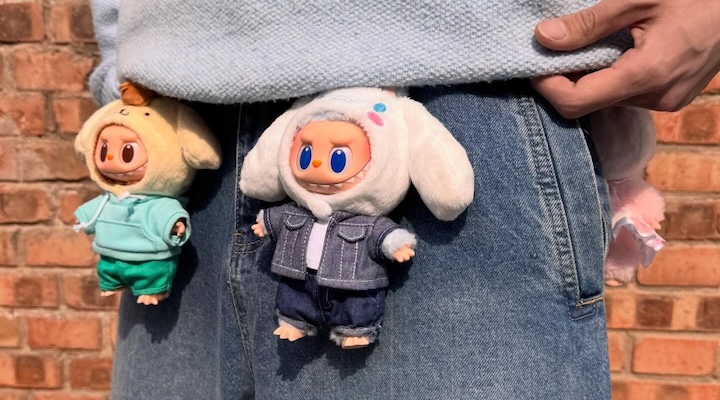
The fracture line ran through one character: Labubu, the snaggle‑toothed imp that powered Pop Mart’s meteoric rise. To traders, Labubu has become both a mascot and a mirror, reflecting the fever and fragility of China’s pop‑culture economy.
The monster that built a toy empire
Labubu, a bug‑eyed forest creature under Pop Mart’s flagship IP The Monsters, has evolved from an obscure designer toy into a global collectable phenomenon.
Last year, The Monsters’ family alone generated 14.16 billion yuan in sales, up 366 per cent year‑on‑year and contributing 38 per cent of total company revenue.
CEO Wang Ning insists Pop Mart’s story isn’t just Labubu. “Pop Mart has more than one driver,” he said on the earnings call, comparing expectations to “a rookie driver thrown into an F1 circuit”. In other words: thrilling pace, perilous turns.
Blockbuster growth, skittish markets
Even so, investors flinched. Earnings that should have crowned Pop Mart as a new‑generation consumer champion instead exposed its vulnerability. After a two‑year rally in which its shares soared more than 300 per cent, investors grabbed profits and questioned whether the company could maintain viral magic without burning out its fan base.
According to Reuters and Bloomberg data, some short‑sellers who had bet that “Labubu mania” would fade unwound their positions on results day, amplifying volatility. Others saw the fall as a dose of realism for a company once valued like a luxury brand rather than a toymaker.
For years, Pop Mart embodied the optimism of China’s young consumer class. Its blind‑box figurines offered affordable joy amid economic uncertainty. But the same emotional appeal that fuelled its boom now works against it – investor faith, like fandom, can turn quickly.
Plush power and overseas dreams
According to Pop Mart’s filing with the Hong Kong Stock Exchange, overseas sales surged nearly threefold last year and now contribute 44 per cent of revenue. The company opened stores in 20 countries and scaled online platforms from TikTok Shop to Amazon and its own app.
Sales in Asia Pacific rose 158 per cent to 8 billion yuan. While Americas revenue jumped 748 per cent to 6.8 billion yuan, sales in Europe and other regions climbed 506 per cent to 1.45 billion yuan. Product‑wise, plush toys stole the spotlight. Revenue for the category quintupled to 18.7 billion yuan, surpassing vinyl figurines and accounting for more than half of total sales. The Monsters became Pop Mart’s defining export and its greatest concentration risk.
Searching for the next monster hit
Beyond Labubu, Pop Mart’s intellectual‑property stable is diverse but uneven. Skullpanda earned 3.54 billion yuan, Crybaby 2.93 billion, Dimoo 2.78 billion and Molly 2.9 billion. Newer characters, Twinkle Twinkle and Hirono, brought in around 2 billion each, strong debuts but distant from Labubu’s orbit.
To close the gap, Wang Ning has ramped up investment in IP incubation: Scouting artists globally, expanding in‑house design teams, and hosting creation contests. The company now counts 17 artist IPs with annual sales of more than 100 million yuan.
Managing joy and expectations
For consumers, Pop Mart represents escapism; for investors, it has become a test of China’s creative‑brand potential. The company now operates 630 stores and 2637 roboshops worldwide, while its membership program boasts 73 million users contributing nearly 94 per cent of sales. Few Chinese brands have built such an engaged ecosystem. Yet the same passion that fuels collectability can flicker.
The 22 per cent plunge doesn’t erase Pop Mart’s triumph. The company has already achieved what many Chinese consumer brands hope for, yet now must learn the slow discipline of staying there.
Further reading: How Pop Mart’s Labubu craze is powering its path to US$4.2 billion in 2025.