In China’s red-hot gold and jewellery arena, 97-year-old Chow Tai Fook Jewellery Group is mounting a strategic offensive. With over 5000 stores worldwide and a market capitalisation of HK$122 billion (roughly US$16 billion as of late 2025), the Hong Kong-based giant retains unmatched scale. Yet upstarts like Laopu Gold, whose revenue soared 148 per cent year-on-year in early 2024, with shares surging 437 per cent post-IPO, and Luk Fook, boasting more than 3020 points of sale across Greater Chi
na and beyond, are eroding its dominance and forcing a bolder global play.
A creative director as strategic weapon
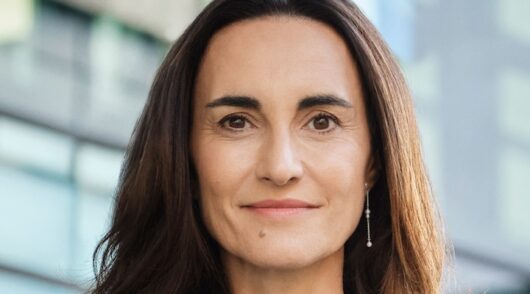
Enter David Tse, Chow Tai Fook’s newly appointed global creative director. Tse, whose resume reads like a who’s who of global icons, including Burberry, Uniqlo, Google, Starbucks and Volvo, stepped into uncharted territory at Hermès China as the French house’s first creative director outside Paris. There, he bridged Eastern sensibilities with headquarters’ exacting standards, collaborating with global artists to infuse local narratives into high-end campaigns. Now at Chow Tai Fook, Tse inherits a canvas rich with history but ripe for reinvention.
He will lead the team in developing the brand’s creative identity and in executing a unified creative strategy across all touchpoints, from product and retail to digital and communications. “I am excited about the opportunity to contribute to Chow Tai Fook’s transformation from a cherished Chinese jeweller into a global Chinese luxury brand,” Tse told Inside Retail.
He frames the opportunity in structural terms.
“Given the widening and diversifying base of luxury consumers, there lies tremendous potential for the brand to reinterpret and elevate its heritage, crafting a narrative that resonates deeply with today’s sophisticated and evolving clientele globally,” he said.
Critically, Chow Tai Fook is the first major Chinese jewellery house to appoint a creative director with this level of international exposure, signalling a willingness to compete head‑on with both Western houses and domestic upstarts on design language and brand storytelling, not only on distribution and price.
Celebrity, culture and the battle for mindshare
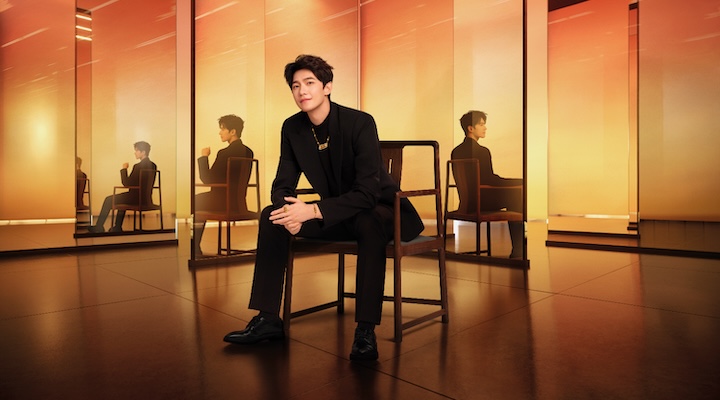
Chow Tai Fook’s appointment of popular Chinese actor Yang Yang as global brand ambassador complements Tse’s creative remit by putting a recognisable face to the brand’s push for emotional relevance.
With brooding intensity in hits like ‘You Are My Glory’, which has amassed 70 million Weibo followers, the 33-year-old embodies Chow Tai Fook’s youth pivot.
Yang’s appeal lies in his authenticity: a homegrown star untainted by Hollywood gloss, perfect for peddling pieces like the Kwan Collection, which marries Feng Shui symbolism with modern minimalism.
The broader context is a generational shift in Chinese luxury consumption. Reports from global banks and consultancies suggest that younger Chinese buyers are pivoting from logo-heavy Western pieces toward designs that encode identity, culture and perceived investment value, making heritage gold, with its dual allure as adornment and store of value, particularly attractive. In this environment, “Chineseness” is no longer a constraint but a competitive asset.
Going global as domestic competition heats up
If the creative appointments define “what” Chow Tai Fook wants to be, its regional expansion explains “where” and “how fast.” The group recently opened a new store in Bangkok’s Siam Paragon, following the debut of its first newly designed Southeast Asia store at Singapore’s Changi Airport in November 2025.
Building on that momentum, it plans to open its first store in Australia and another in Canada by the end of June, while preparing to enter the Middle East within two years. These locations map closely onto key luxury travel corridors and sizable overseas Chinese communities, from Sydney and Melbourne to Toronto and Dubai.
These new locations will be “newly designed” experiential spaces, likely infused with Tse’s touch.
While this expansion will position Chow Tai Fook alongside Western luxury brands in prime malls and airports, reinforcing its desired status as a global luxury player rather than a diaspora-only brand, it also targets high-growth pockets.
According to Euromonitor, the Asia Pacific region is set to become increasingly influential, accounting for 41 per cent of all luxury sales by 2030. Meanwhile, Canada plays host to North America’s 1.5 million-strong Chinese community, while the Middle East taps petrodollar wealth amid Dubai’s status as a luxury hub. Chow Tai Fook is well positioned for economies that European peers envy.
Zoom out, and Chow Tai Fook’s manoeuvres mirror Asia’s luxury awakening. China’s domestic slowdown pushes brands outward, but opportunities abound: global high-net-worth individuals from Asia will drive 60 per cent of luxury growth by 2030.
Eastern brands like Shanghai Tang or Qeelin have nibbled at edges, but none match Chow Tai Fook’s war chest or store density. Tse’s edge? He’s elevating “Chineseness”, countering Eurocentrism in a world where 40 per cent of luxury buyers are non-Western (BCG).
The challenge will be execution: international consumers who do not have pre-existing emotional ties to Chow Tai Fook will judge it directly against Cartier, Bulgari and Tiffany, as well as emerging Chinese names like Laopu Gold.
Further reading: Why China’s jewellery giants are selling less amid a precious metal boom.