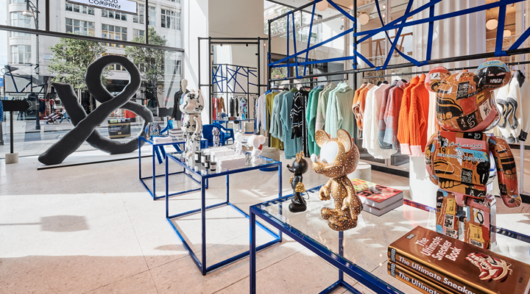
A Bathing Ape – Hong Kong Japanese streetwear brand A Bathing Ape (Bape) opened a flagship store at 1881 Heritage in Hong Kong, debuting an all-white interior design that represents a shift in the brand’s store aesthetics. The store blends technology, design and local cultural references. A curved LED screen at the storefront features animated visuals inspired by Hong Kong’s neon signage, while the interior is anchored by a Shark Seijin fibreglass sculpture designed to resemble carve
carved stone.
The monochromatic setting provides contrast to Bape’s graphic-heavy collections, with colour-changing Line Camo LED lighting adding movement and atmosphere throughout the space.
Alongside its core apparel offering, the store has launched two Hong Kong-exclusive T-shirts featuring Ape Head and Baby Milo graphics reworked with local city motifs. The opening also coincides with the release of Drop 3 of Bape’s FW25
“Performance All Weather” collection, developed under the creative direction of Kazuki Kuraishi.
Extending beyond retail, Bape has partnered with Tokyo-based pancake brand Flipper’s to introduce Bape Cafe within the flagship. The cafe combines Bape’s ABC Camo design language with Flipper’s minimalist aesthetic, reinforcing the brand’s strategy of positioning stores as multi-purpose lifestyle destinations rather than traditional points of sale.
Rapha Clubhouse – Shanghai
Rapha opened its first Clubhouse in Mainland China last November.
Developed in collaboration with creative design agency Seen Studios, the Shanghai location reflects cycling lifestyle brand Rapha’s long-term investment in one of the world’s fastest-growing cycling communities.
Launched in London in 2012, Rapha’s Clubhouse format blends retail, café and community programming, positioning physical stores as brand-led social hubs rather than traditional points of sale. The Shanghai opening is the first to introduce Rapha’s next-generation Clubhouse concept.
Inspired by Italian café culture, the space reinterprets the idea of a cycling club as a contemporary, multi-purpose environment. Housed within a restored 1925 mansion, the interior combines British industrial influences with mid-century modern design, using materials such as walnut, stainless steel, white oak and ceramic tiling, complemented by subtle pink accents drawn from Rapha’s brand palette.
Beyond retail, the location will host regular group rides and events, reinforcing its role as a community anchor.
The launch builds on Rapha’s growing footprint in China, where its Rapha Cycling Club has more than 400 members across Shanghai and Beijing, and participation in the Women’s 100 ride exceeded 1000 riders nationwide.
Champion – Chengdu, China
Global sportswear brand Champion has reopened its flagship store at Chengdu Yingjia Plaza, unveiling a renovated space under the theme “Reimagining Classics.”
The reopening marks a milestone in the brand’s renewal strategy and blends Champion’s century-old athletic heritage with contemporary streetwear aesthetics.
The redesigned store incorporates local Chengdu culture, combining the city’s traditional bamboo weaving craft with Champion’s signature Reverse Weave technique.
The first floor merges campus retro style with streetwear trends, while the second floor features a giant sweatshirt display wall and interactive zones, including a DIY area where visitors can create bamboo-woven coasters.
Beyond design, the Chengdu store reflects Champion’s broader “Rooted in Heritage, Embracing the Local” initiatives for 2025, which encompassed product innovation, space renovation, and experiential retail. The flagship also serves as a DIY customisation hub, allowing customers to participate in creating their own “reimagined classics”.
Champion described the Chengdu Yingjia flagship as a platform for cultural co-creation and consumer interaction, aiming to blend traditional craft with contemporary streetwear and encourage visitors to engage actively with the brand.
Hermès – Bangkok, Thailand
Hermès reopened its redesigned and expanded store at IconSiam mall on the banks of the Chao Phraya River in Bangkok.
The renovation, completed in November, updates the brand’s 2018 store with a double-height layout and enhanced merchandising for its 16 métiers.
The first-floor entrance features the house’s signature pink marble ex-libris and leads into women’s silk and fashion jewellery. Terrazzo floors guide shoppers to men’s silk and beauty collections, while a curved rattan column separates the men’s and women’s ready-to-wear and footwear areas.
A terrazzo staircase connects to the ground floor, where watches and jewellery are displayed amid plush ombré carpets and fabric panels. Equestrian and leather goods sections benefit from natural light, and there is also green marble and Grecques lighting highlighting the home goods area.
Paris-based architecture firm RDAI led the design, blending contemporary interiors with locally crafted elements such as rattan columns and feature carpets. The store also features curated artworks from the Emile Hermès collection and contemporary photography, alongside rattan-and-metal horse sculptures by Thai artist Terawat Teankaprasith.
Hermès says the updated store reflects Bangkok’s energy while providing a light-filled, immersive environment for customers to explore the brand’s range of products.
This story first appeared in the February 2026 issue of Inside Retail Asia magazine.