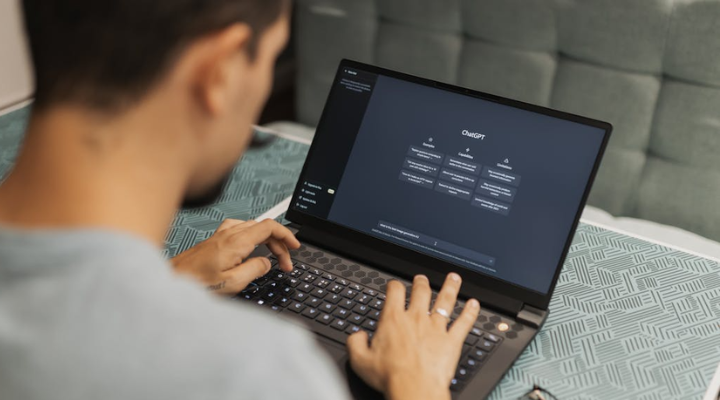
AI adoption is increasing among Australian businesses. A survey by Small Business Loans Australia (SBLA) found that 80 per cent of businesses are using AI in some form, and 41 per cent reported that the technology reduced at least 25 per cent of labour time.
AI and productivity
The survey of 200 business owners and decision makers examined current use cases and potential profit outcomes. Businesses reported using standalone platforms such as ChatGPT and Claude, as well as integrated software including Microsoft Copilot and AI chatbots.
Usage is concentrated in administration, workflow management, and writing and communication. AI is being incorporated into daily processes rather than limited to individual tasks, with the aim of reducing costs and supporting profit outcomes. According to SBLA, four out of five businesses use AI on a regular basis, and one in three report saving at least 25 per cent of working hours. This suggests AI is moving from a support tool to an operational component.
The survey also examined end-to-end integration. Businesses expect AI to support full workflows rather than isolated tasks. SBLA assessed potential profit increases if AI were implemented across five core functions: writing and communication; administration and workflow; sales and customer service; decision-making and analytics; and creative work. Most respondents expect profit gains across these functions with expanded AI use.
Regional variation
Adoption levels vary across states. WA recorded the highest adoption rate, with 91 per cent of businesses reporting AI use. In both NSW and WA, 39 per cent of businesses report that AI reduces more than 25 per cent of labour time.
“Businesses still see the biggest opportunity in AI as removing repetitive admin-heavy tasks, communication and moving work forward without constant human intervention,” said Alon Rajic, founder of SBLA.
He said the next phase of adoption is expected to focus on integration into work processes. As time savings accumulate across teams and weeks, businesses may see changes in profit outcomes.
Businesses reported the highest confidence in AI applied to administration and workflow, with 77 per cent forecasting profit increases, followed by writing and communication at 75 per cent. Confidence levels were lower in areas involving judgment, including decision-making and customer engagement, at 68 per cent.
Policy gap
Alongside productivity gains, a report from HR Partner identifies a gap between AI use and internal governance in small businesses. The State of AI in Small Business HR 2026 surveyed HR professionals in SMBs across the UK, US and Australia. It found that 80 per cent use AI in daily work, while 23 per cent report having a formal policy in place.
The gap reflects a focus on efficiency. HR teams are adopting AI to address immediate needs, including drafting job descriptions and summarising meetings, without formal approval processes. The absence of formal guidance means responsibility for AI-driven outcomes, including recruitment and data security, remains with employers. The report also found that 53 per cent of businesses lack a budget or strategy for AI training.
Fiona Adler, co-founder of HR Partner, said the challenge in 2026 is to establish AI usage policies so businesses can continue adoption while managing data and organisational exposure.
Overall, the findings show AI is affecting productivity and profit outcomes in small businesses in Australia. At the same time, gaps in policy and training remain.
- This story was originally published on Inside Small Business.