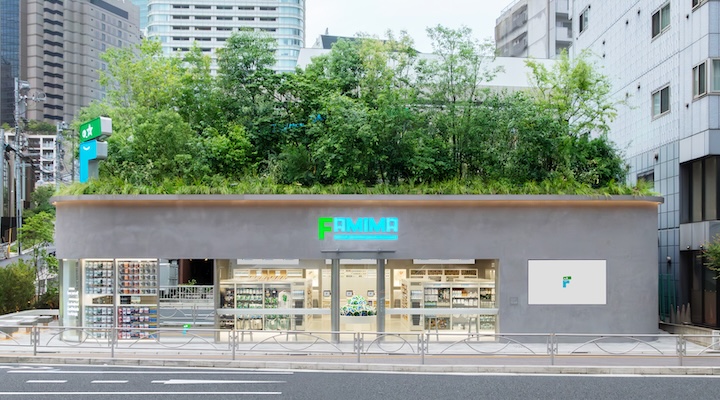
FamilyMart is stepping up its push beyond the conventional convenience store format, unveiling its “park” concept in one of Tokyo’s most expensive districts, Minato ward. Spanning 217sqm, the concept store, dubbed Famima Park Azabudai, features a rooftop forest, fitting rooms and dedicated product advisors. The chain’s official character perches on the building’s corners, visible from the surrounding high-rise towers. It is, by FamilyMart’s own description, a convenience store “wor
worth going out of your way to visit”.
A new brief for an old format
Last year, FamilyMart appointed Nigo, the founder of A Bathing Ape and Human Made and a designer with three Louis Vuitton collaborations to his name, as creative director. Famima Park Azabudai, launched under the Next FamilyMart Project banner, is the first physical expression of that partnership. The project also coincides with Familymart’s 45th anniversary this September.
“Through our new Famima initiative, we aim to unlock the full potential of convenience stores and bring it to life,” said Tatsuo Odani, representative director and president of FamilyMart. “Convenience stores are a retail format and a unique cultural asset that Japan can proudly share with the world.
“To achieve sustainable growth going forward, transformation and evolution with an eye to the future will be essential. Through co-creation with creators, we will bring even greater creativity, enjoyment, and excitement to convenience stores.”
Odani added that the goal is to become a differentiated global brand that cannot be imitated by others.
The retail destination
Function is where the flagship departs most sharply from the standard convenience store concept.
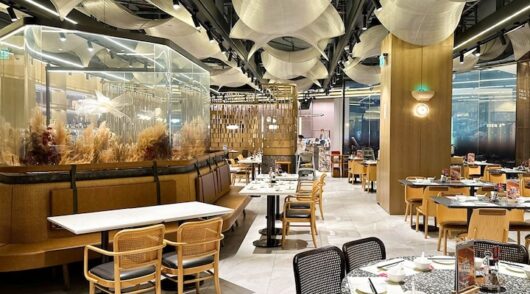
A takeaway window, dubbed Famima Stand, lets passers-by buy coffee, tea or the chain’s signature Fami-Chiki fried chicken without entering the store, while benches and greenery around the building create the park-like setting the name promises. Inside, counter seating runs along the glass facade; the checkout uses a kiosk format with products displayed across the front wall; and the sales floor is merchandised like a pop-up, with hero products staged from the entrance through the central fixtures. Multilingual support and product advisors round out a service model closer to that of a specialty retailer than a corner store.
“This all started with a simple idea: Wouldn’t it be great if convenience stores carried things like this?” Nigo said. “Since then, I’ve had countless meetings with the FamilyMart team. Now, more than a year after announcing our partnership, we’re finally able to launch Famima Park Azabudai as the first tangible expression of what we’ve been working toward.”
The store’s design comes from Wonderwall, the studio of Japanese designer Masamichi Katayama, whose fashion retail credentials run deep.
“While respecting the history of innovation and rationality that Japanese convenience stores have cultivated over the years, we set out to pursue the enjoyment and richness that lie beyond them,” Katayama said. “Rather than simply creating a place people stop by because it’s convenient, we have refined every aspect of the store to make it a destination people genuinely want to visit, with a distinctive appeal and uniqueness all its own.”
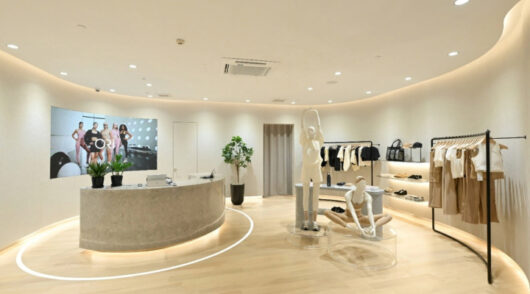
The concept store offers FamilyMart’s private-label apparel line, Convenience Wear, developed with Facetasm designer Hiromichi Ochiai. Shoppers at the Azabudai store will get a shop-in-shop treatment complete with styling touchscreens and fitting rooms. In addition to offering the complete seasonal Convenience Wear lineup, the flagship store will also carry exclusive items designed to complete each look.
Famima Park Azabudai also launched an official character and an explicit IP business. Going forward, FamilyMart also plans to roll out products featuring the character at stores nationwide, allowing even more customers to experience the Famima world.
A market out of room
Seven-Eleven, FamilyMart and Lawson control roughly 90 per cent of the market, which comprises more than 56,000 stores. Sales hit a record 13.3 trillion yen last year, but network growth has effectively stalled.
The industry’s centre of gravity has shifted from opening stores to extracting more value from each one. Labour shortages, an ageing customer base and rising competition from drugstores compound the squeeze.
In that context, a single 217sqm flagship will not move FamilyMart’s bottom line, nor is it meant to. Famima Park Azabudai functions as a test of which elements, from merchandising to IP, can be scaled across the chain’s 16,000-plus stores, and a wager that in a market where the big three sell broadly similar products at broadly similar prices, brand and experience are the battlegrounds left to fight on.