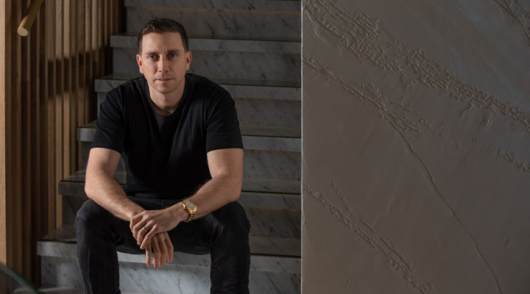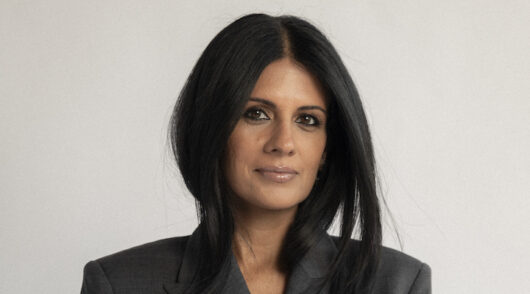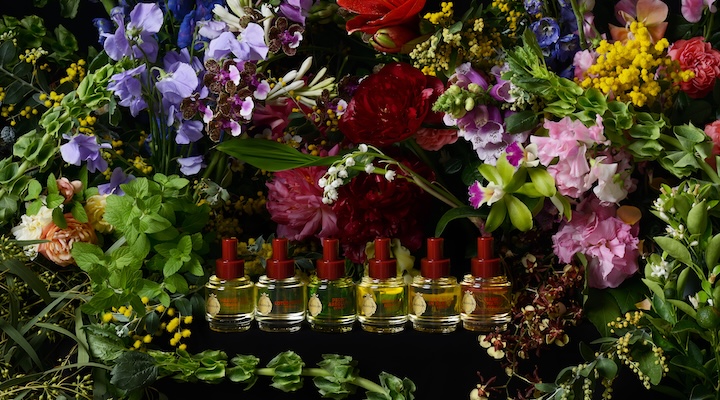
A year and a half after being acquired by Japanese beauty giant Kosé Corporation, Thai beauty and wellness brand Panpuri has been pushing deeper into Japan and China while doubling down on experiential retail at home, anchored by its Panpuri Wellness flagship at Bangkok’s Gaysorn. Panpuri’s founder Vorravit Siripark spoke with Inside Retail about learning to slow down and the discipline of refusal to build a sustainably growing business. Inside Retail: Your mornings begin with breathwork an
hwork and perfume oil, while your evenings end with a candle. Has your morning always looked like this?
Vorravit Siripark: It wasn’t always this intentional. In my consulting years, mornings were mostly about getting out the door and focusing on efficiency, deadlines and results. Life moved quickly, and I realised that if I didn’t consciously create moments of pause, they simply wouldn’t happen.
I still remember buying a small bottle of fragrance at Sephora during those years to look for a feeling. For a few moments, the scent created a sense of calm before the day began. And, breathwork goes back even further. My father taught me simple breathing exercises on the way to school. I didn’t fully appreciate them at the time, but over the years I found my way back to them.
Looking back, I learned that moments of stillness don’t simply appear unless we create them. Those small rituals have become my way of beginning each day with greater clarity.
IR: Your calendar probably looks anything but peaceful. Yet when people describe Panpuri, words like “quiet” and “intentional” always come up. Is creating calm something that comes naturally to you, or is it something you have to work at every day?
VS: It definitely takes intention. My calendar isn’t naturally calm, and I don’t think anyone’s life is. I believe that wellbeing is about creating small rituals that help you reconnect with yourself, even on the busiest days. And for me, that might be a few minutes of breathwork before a meeting, choosing a fragrance that reflects how I want to feel or ending the day with the simple ritual of lighting a candle.
That’s also how I think about Panpuri. We’ve never set out to create an escape from everyday life. We’ve always wanted to help people bring a greater sense of harmony into it.
IR: Twenty years ago, wellness wasn’t the cultural conversation it is today. Did people understand your vision back then, or did it sometimes feel like you were speaking a language no one else was hearing?
VS: When we founded Panpuri in 2003, wellness wasn’t yet part of everyday conversation. After my time at SDA Bocconi, I looked at the global beauty landscape and felt there was an opportunity to present Thailand differently. Around the world, Thai wellness was often associated with spas and massage. While those traditions are certainly part of our heritage, they represent only a small part of a much richer philosophy centred on harmony, nature and everyday rituals.
I wanted to create a brand that could express those values through contemporary craftsmanship and design, making them relevant to modern life while remaining true to their origins. Of course, there were moments when people didn’t immediately understand what we were trying to build. But I never saw that as a disadvantage. Meaningful ideas often take time to find their audience.
Looking back, I don’t think we were ahead of the market as much as we were simply staying true to a belief. Over the past two decades, the world has gradually moved closer to that belief, placing greater value on wellbeing, intentional living and experiences that nourish both the senses and the mind.
IR: Has your own definition of wellness changed over the last two decades?
VS: To me, the essence hasn’t changed but the role wellness has. Twenty years ago, wellness was often seen as something occasional. Today, I think people recognise that wellbeing isn’t a luxury or an escape. It’s something we need to sustain ourselves in an increasingly fast-moving and complex world.
I’ve also come to appreciate that wellness is deeply personal. There is no universal ritual that works for everyone. For one person it may be fragrance, for another it may be meditation, movement or simply a few quiet moments at the beginning or end of the day. What matters is finding the rituals that help you feel more balanced, more present and more connected to yourself.
IR: What are you noticing in consumer behaviour today that perhaps isn’t obvious from the headlines?
VS: The headlines often suggest that wellness has become one of the most resilient consumer categories, even during periods of economic uncertainty. I think there’s truth in that, but what’s more interesting is why.
People are becoming much more intentional about what they choose to bring into their lives. They’re looking for products and experiences that genuinely improve how they feel, and they’re asking deeper questions about ingredients, craftsmanship, quality and purpose before making a decision.
I also see consumers becoming much more open-minded. Today, they’re willing to discover brands from different parts of the world, provided those brands have an authentic point of view and a clear sense of identity. They’re less influenced by where a brand comes from and more interested in what it stands for.
IR: How do you know when to evolve the brand, and when to protect what has always made it distinctive?
VS: Every decision begins with a simple question: does this strengthen who we are?
As the brand grows, there will always be opportunities to expand into new categories, new markets or new experiences. Growth itself isn’t difficult. The real challenge is growing without losing your identity.
Our boutiques are a good example. No two are exactly alike. Each one is thoughtfully designed in response to its city, its architecture and its culture, allowing every space to feel rooted in its surroundings while remaining unmistakably Panpuri. The expression may change, but the feeling should always be the same.
IR: It’s been more than a year since Panpuri joined the Kosé family. Looking back, what’s surprised you most about this new chapter?
VS: What has surprised me most is how much it has reaffirmed what we believed from the very beginning.
Of course, Kosé has brought tremendous strengths in research, development, manufacturing and regional infrastructure. But what has been equally meaningful is that we’ve never felt the need to change who we are.
IR: If you were starting Panpuri from scratch in 2026 instead of 2003, what would you build differently?
VS: If I were starting Panpuri today, I don’t think I would change the philosophy. If anything, I believe it’s even more relevant today than it was twenty years ago.
What I would build earlier is the ability to communicate that philosophy. Today’s consumers want to understand the thinking behind what they choose to bring into their lives. They want to know where ingredients come from, how products are made, what a brand stands for, and why it exists. Those conversations have become just as important as the products themselves.
I would also make our commitments to sustainability and responsible craftsmanship more visible from the beginning. These values have always guided many of our decisions, but today’s consumers rightly expect greater transparency and accountability. That’s something I would embrace much earlier.
Perhaps the biggest lesson, though, is to trust the journey.
When you’re building something different, there are always moments of uncertainty. You wonder whether the market is ready, whether people will understand your perspective, or whether you’re moving too slowly. Looking back, I realise that building with patience was never the mistake. It allowed us to create a brand with a clear identity instead of simply responding to trends.
IR: What gives you the most optimism about where wellness is heading over the next decade? And what worries you?
VS: What gives me optimism is that people’s need for wellbeing has never been greater.
We live in a world where life is becoming increasingly connected, fast-moving and demanding. In many ways, technology has made our lives easier, but it has also made it more difficult to find moments of presence and balance. I think that’s why wellness is no longer seen as an occasional indulgence. It’s becoming an essential part of how people choose to live.
What encourages me most is that consumers are becoming more thoughtful. They’re looking beyond trends and marketing claims. What concerns me is when wellness becomes reduced to aesthetics or another marketing label.
IR: As the brand expands into new markets, how do you decide which opportunities genuinely strengthen the brand, and which even if commercially attractive aren’t worth pursuing?
VS: We look for markets where there is an appreciation for craftsmanship, culture and thoughtful living and places where people value quality, authenticity and emotional connection. Those qualities matter far more to us than the size of the opportunity alone.
Every new market should feel like a natural extension of the brand, not simply another point on a map. That means taking the time to understand the local culture, designing experiences that feel relevant to that place, and ensuring every boutique reflects both its surroundings and the spirit of Panpuri.
There are certainly opportunities that may be attractive commercially. But if pursuing them would require us to compromise our standards, our philosophy or the experience we want to create, then we are comfortable saying no.
I’ve learned that sustainable growth isn’t about saying yes to every opportunity but having the discipline to choose the ones that strengthen the brand for the long term.
IR: Is there an experience or category you’ve always wanted Panpuri to explore but felt the timing wasn’t right?
VS: I’ve always believed that Panpuri was never meant to be defined by products alone. From the beginning, my aspiration has been to build a brand that people can experience through multiple expressions. That’s why I’m particularly excited about creating spaces where people can slow down, reconnect with themselves and experience our philosophy in a more immersive way. Looking ahead, I’d love to take that idea even further, creating destinations where people can fully immerse themselves in the world of Panpuri for a few hours, or even a day.
IR: As you look ahead, what excites you most about Panpuri’s next chapter?
VS: As the brand grows, we’ll continue to evolve in many ways. We’ll deepen our work in fragrance and skincare, create more immersive retail experiences, and explore new expressions of hospitality and wellbeing. But none of those are goals in themselves. They are simply different ways of bringing our philosophy to life.
What gives me the greatest sense of purpose is knowing that someone, somewhere in the world, may discover Panpuri and find a few moments of calm, comfort or inspiration in their day. Those moments may seem small, but they can have a lasting impact.
If we can continue creating experiences that help people reconnect with themselves and with the people around them, while remaining true to the values that have guided us from the beginning, then I believe the next chapter will be our most meaningful one yet.
This story first appeared in the August 2026 issue of Inside Retail Asia magazine.